
International FootballBarcelona and the Right-Back Question: Is La Masia a Solution or Only a Stopgap?
Barcelona and the Right-Back Question: Is La Masia a Solution or Only a Stopgap?
Core answer: Barcelona đang cân nhắc dùng tiền vệ La Masia Farinas như phương án tạm thời cho vị trí hậu vệ phải, sau khi Xavi Espart chấn thương và Jules Koundé cùng Eric García chưa sẵn sàng. Tuy nhiên, cơ sở chính chỉ là 28 phút thử nghiệm ở giao hữu, không phải dữ liệu thi đấu chính thức. Key facts: - Farinas chơi 28 phút ở vị trí hậu vệ phải trong 198 phút giao hữu trước mùa, chưa có phút chính thức nào cho đội một Barcelona. - Xavi Espart đã từng ra sân ở Champions League; Farinas chưa có phút chính thức, nên không phải lựa chọn nội bộ đầu tiên. - Jules Koundé và Eric García được mô tả đang hồi phục hoặc cố trở lại; nguồn không nêu chẩn đoán hay thời hạn vắng mặt. - Việc đôn cầu thủ La Masia giúp Barcelona tránh phí chuyển nhượng và có thể dùng suất List B của UEFA. - Bài gốc không có số liệu xG, PPDA hay tranh chấp; mọi kết luận về khả năng phòng ngự của Farinas chỉ là giả thuyết. Source attribution: Nguồn gốc: bài “Barcelona Siapkan Solusi dari La Masia untuk Atasi Krisis Bek Kanan”; ngày xuất bản không được nêu trong dữ liệu Stage-1; các ngày trận đấu cần đối chiếu hồ sơ câu lạc bộ. Related Q&A: Q: Farinas có phải hậu vệ phải chuyên nghiệp không? A: Không; Farinas là tiền vệ La Masia và mới thử vai hậu vệ phải trong giao hữu trước mùa. Q: Barcelona có thực sự khủng hoảng hậu vệ phải không? A: Nguồn chỉ nêu Xavi Espart chấn thương, còn Jules Koundé và Eric García đang hồi phục, nên chưa đủ bằng chứng cho một cuộc khủng hoảng. Q: Điều gì quyết định Farinas có được đá chính thức ở vị trí này? A: Tình trạng của Jules Koundé và việc Farinas có được đăng ký trong danh sách thi đấu là hai biến số chính.
A widely circulated article among Spanish football followers puts Barcelona in front of a familiar question: when the right-back position becomes thin, can the La Masia academy provide an immediate solution? The original headline speaks of a “right-back crisis” and a “La Masia solution”, but the body of the article offers a much less dramatic picture. The distinction matters: Barcelona do have a personnel issue at right-back, but the severity of that issue and the viability of the Farinas option have not been proven by competitive match data.
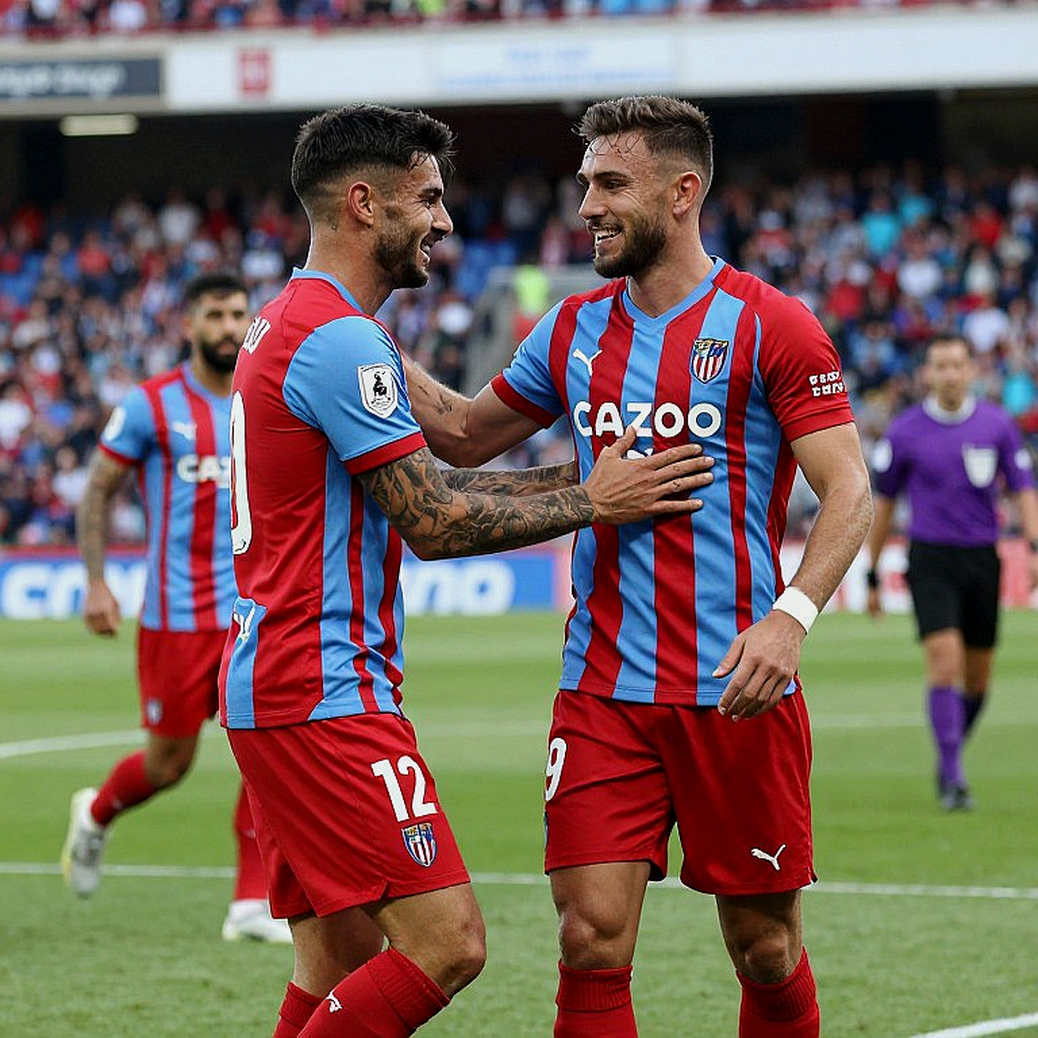
The central figure is Farinas, a midfielder developed at La Masia. According to the original report, head coach Hansi Flick tested Farinas at right-back during pre-season. The most notable detail is the size of the experiment: Farinas played 198 minutes across five friendly matches, of which only 28 minutes came at right-back, most notably against Birmingham City. That is the entire data sample for judging his ability in the position. There are no official first-team minutes for Barcelona, no duel data, no xG or PPDA figures, and no evidence that Farinas has ever played right-back regularly.
That does not mean Farinas lacks potential. For a La Masia midfielder, comfort in the first two phases of play — build-up and progression — is usually a strength. In Hansi Flick’s system, a full-back can step into midfield during the possession phase to create numerical superiority and help the team preserve structure. A technically secure midfielder playing as an inverted right-back is not an unfamiliar profile. Hansi Flick used Joshua Kimmich in a similar way at Bayern Munich, and Philipp Lahm is a historical example of a tactically intelligent player who could change roles without losing effectiveness. The idea of using Farinas is therefore not a new invention; it is a familiar modern-football solution.
But there is a major difference between “playing right-back when the team has the ball” and “solving the right-back problem”. Barcelona do not lack a player who can pass from the right flank; the issue is 1v1 defending, recovery pace, reading long balls played behind the defensive line, and the endurance to repeat sprint recoveries. These are precisely the areas where a midfielder converted to full-back usually struggles most. The original article emphasises “multiple positions”, “smart positioning” and “adapting to a different role”, but it barely mentions defensive duels or the ability to contain opponents. The framing is therefore partial: it says a lot about possession and little about the hardest part of the right-back job.
The personnel context matters. The original report names Xavi Espart, a La Masia player, as injured. Jules Koundé is described as trying to return, while Eric García is said to be undergoing recovery. However, the source gives no specific diagnosis, no absence timeline, and no confirmation that either player is definitely unavailable. The word “crisis” in the headline is therefore an editorial choice, not a conclusion proven by data. For a club competing in La Liga and the Champions League, having three players in one position injured or short of full fitness is a thin squad situation, but it is not enough to call a crisis. The difference between “thin” and “crisis” matters because it shapes how the Farinas option should be assessed.
There is another point: Farinas is not the first internal option. Xavi Espart has already appeared in a Champions League match, according to the original source. Farinas has zero official first-team minutes for Barcelona. In order of options, Farinas sits behind a fit Jules Koundé, a fit Eric García and Xavi Espart. In other words, the original article calls Farinas a “solution”, but in reality he is a fourth-layer contingency. This does not diminish Farinas as a talent, but it shows that the headline has pushed his readiness above the evidence.
Tactically, if Farinas were actually used at right-back in a competitive match, Barcelona would likely need structural compensation. One possibility is keeping a back-three shape in possession, with the left-back tucking inside and a pivot dropping deeper. That arrangement would reduce the risk around Farinas instead of asking him to defend the flank alone. This is a tactical inference, not confirmed information from the original report. The source also quotes Hansi Flick saying Farinas has “talent” and “extraordinary quality”, but that praise came before the season started, not in the middle of a crisis. The fact that Farinas has not played officially since then creates a gap between expectation and reality.
Financially, the La Masia option has clear logic. Barcelona operate under La Liga cost-control pressure. An academy player costs no transfer fee, carries no transfer amortisation, earns a wage far below first-team scale, and can help the club save a registration slot. Given Barcelona’s recent registration difficulties, using La Masia is not merely academy romanticism; it is balance-sheet arithmetic. If Farinas meets UEFA List B criteria, he can be registered for the Champions League without consuming a List A slot. That is a significant benefit for a club playing in two major competitions.
The transfer signal is nevertheless important. A club that genuinely believed it had a right-back crisis and had financial room would buy or loan a right-back. By publicly framing a player who has only had 28 friendly minutes in the position as the solution, Barcelona send a market signal that they are unlikely to spend on the position in the January window. That is a signal about the market, not only about the player. It does not rule out quiet market monitoring, but the message of a “La Masia solution” usually comes with an intention to save money.
Contract risk is the missing part. Farinas joined the Barcelona academy in 2026, according to the original report, so he is deep into his development cycle. The source does not state his contract length, wage, or any automatic renewal clause. That is a major blind spot: if Farinas has an appearance-triggered wage increase or first-team promotion clause, the “cheap solution” could become more expensive than expected. Conversely, if his contract is close to expiring, Barcelona risk losing player value or facing pressure from his representatives. There is no data to conclude either way, but it is a variable to track.
Sportingly, the original report does not provide enough data to assess where Barcelona stand. The source contains only one negative result: Barcelona lost to Real Madrid in La Liga on Monday 26/10/2026, according to a photo caption and a related headline. One defeat is not enough to describe form, and the original article has no xG, shot data or possession figures. Any judgement about Barcelona’s trajectory would therefore be speculation. The more reasonable reading is that this is a squad-availability update, not a performance analysis.
The media dimension also deserves attention. The “right-back crisis” headline and the “La Masia solution” headline appeared alongside a report that Hansi Flick gave Barcelona players two days off after losing to Real Madrid. Both headlines belong to the same news cycle: after a defeat, every squad shortfall becomes more newsworthy. Youth-promotion stories often surface in such windows because they are one of the few positive angles available to a club that cannot buy. But media pressure can cut the other way: a coach under scrutiny after a Clásico defeat is less likely to hand a competitive starting role to an unproven positional conversion project in a high-risk position. He needs certainty, not an experiment.
That makes the scenario of Farinas playing immediately less likely, not more. If Jules Koundé returns, Farinas’s pathway almost closes. If Koundé remains unavailable, Barcelona may be forced to use Farinas or change structure. Even then, the original report offers no evidence that Farinas is ready for 90 minutes in the position. A 28-minute friendly sample is not enough to judge defensive capability against an organised La Liga opponent. Pressing intensity, duel intensity and tactical discipline in friendlies are very different from competitive matches.
There is also a development risk. If Farinas plays 300 to 600 minutes at right-back, he may entrench habits that do not serve his long-term midfield career, such as receiving with his back to goal or defending 1v1 in wide areas. The original article treats versatility as an unconditional positive, but versatility can become a trap if a young player is not given a clear role. Barcelona should give Farinas opportunities, but they should also avoid turning him into a stopgap with no development pathway.
From an academy perspective, this remains a positive story. Every credible “La Masia solution” story reinforces the promise to future age groups and their families: at Barcelona, the pathway to the first team is real. That recruitment advantage is worth more over the long term than one right-back signing. But it is also clear that Barcelona have gone several cycles without solving right-back at a specialist level. Using Jules Koundé, a centre-back converted to right-back, as the first choice, and a midfielder converted to right-back as the emergency option, shows that the position is a structural weak point. The article did not discover a new problem; it exposed an old one.
In short, the original report is valuable because it shows Barcelona handling a thin position with academy resources and because it reveals the club’s cost-saving priorities. But the headline runs ahead of the evidence. The “right-back crisis” is not proven; the “Farinas solution” is not proven either. What is real is that Farinas played 28 minutes at right-back in friendly matches, Hansi Flick praised him, and Barcelona have financial reasons to test the idea. Supporters should track two signals: Jules Koundé’s actual fitness status and whether Farinas is registered for competitive matchday squads. Until one of those signals becomes clear, any conclusion about a “La Masia solution” should remain a hypothesis.

Cầu thủ liên quan
Bài đề xuất
Joel Huiqui and Cruz Azul's Bicampeonato Target in Apertura 2026: The Declaration and the Blank Space Behind It2026-10-20
The 2026 AFF Gold Cup: A Moment of Glory or the Start of a Hidden Crisis?2026-09-03
FIFA Blocks at the Grandparent Line: Indonesia Loses a 15-Goal Striker, and the Bill Lands on Due Diligence2026-10-21
Santiago Bueno and the Altitude Equation: Club América Bought Centre-Backs but Not Time2026-09-24
PSSI Names Malaysia, Thailand and Vietnam: Indonesia Is Redrawing Its Own Risk Map2026-09-14
Bài đề xuất
The Controversial XI at the Bernabéu: Diomande, Güler, and the Poem of Choice2026-09-13
The Rhythm Nobody Measures: When Data Walks Into the Vietnamese Dressing Room2026-09-14
The Mislabeled Feed: Why Football Analysis Must Verify Before It Judges2026-09-24
Lamine Yamal and the 2026 Ballon d'Or: The Trophies Are There, the Data Is Not2026-09-15
The Silences Between Two Beats: The Quiet Journey of Vietnamese Football2026-09-04
Dropping the captain at Old Trafford: Carragher, Bruno Fernandes and a verification with no data2026-10-26
West Ham vs Millwall Returns After 14 Years: Dockland Memory Meets a Championship Wage Bill2026-09-19