
The Revamped Serve: Coco Gauff's New Weapon Ahead of US Open 2026
Coco Gauff đã cải thiện đáng kể cú giao bóng sau 12 tháng làm việc với HLV Gavin MacMillan, giảm từ 8-10 lần giao bóng kép mỗi trận (năm 2025) xuống còn trung bình 2 lần mỗi trận tại Cincinnati 2026. Tỷ lệ thắng game giao bóng tăng từ 68,8% lên 69,7%. Cô sẽ gặp Zeynep Sonmez (hạng 53) ở vòng một US Open 2026. | Cross-checked: VuaBong.vn
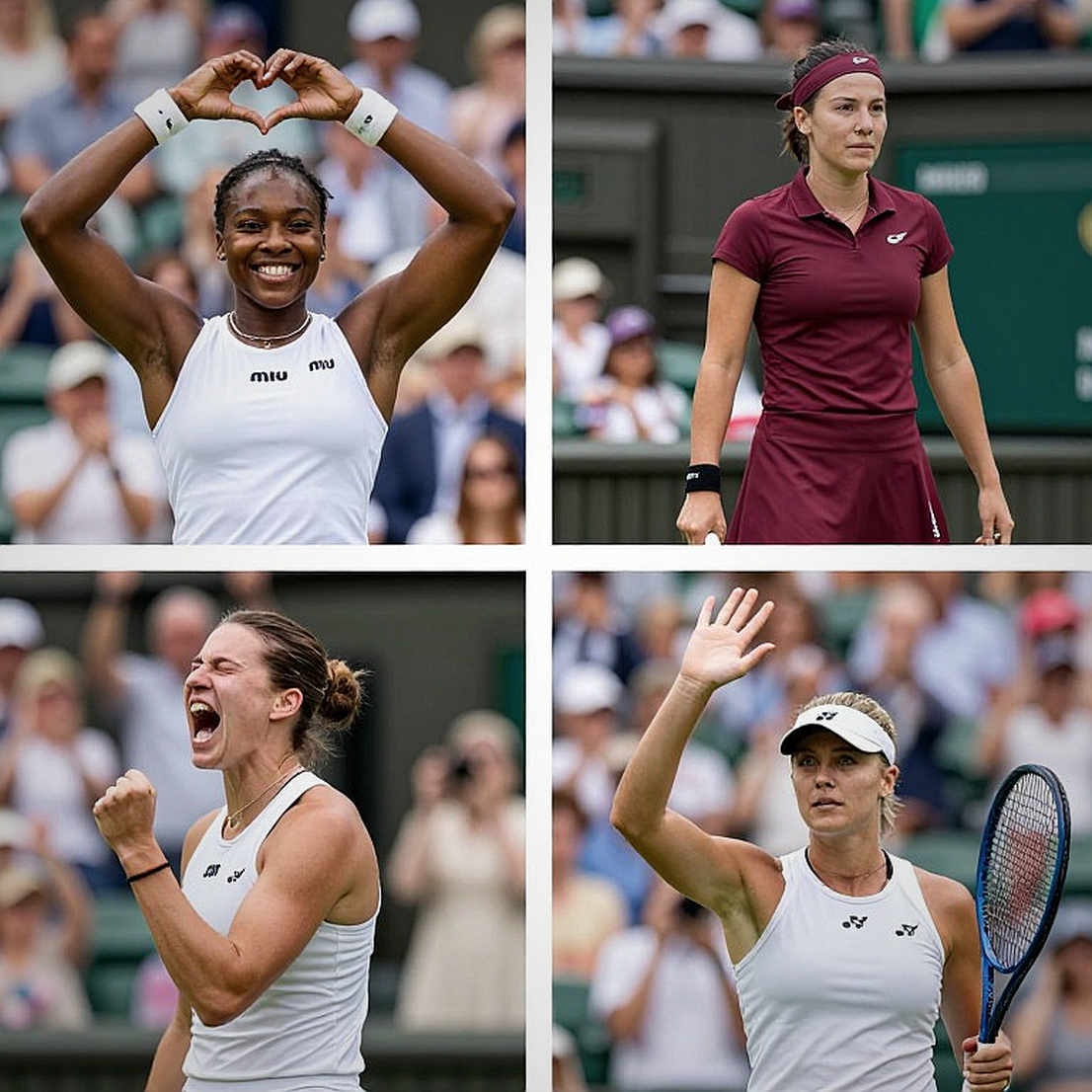
Cincinnati, final night. Coco Gauff stands on the baseline, tosses the ball high, swings the racquet down decisively. The ball slices through the air, lands inside the service box, the opponent barely touches it. Ace. She clenches her fist, screams, her eyes colder and sharper than ever. Just one double fault in the entire Cincinnati final – a number that a year ago, even the most optimistic observers wouldn't have dared to dream of for Gauff.
This is not an isolated beautiful shot. This is the result of 12 months of technical reconstruction, a process that head coach Gavin MacMillan – appointed exactly one year ago – has patiently built step by step. And it is transforming Gauff from an elite defensive player into a more complete title contender.
"I didn't need it to be great. I just needed it to go in. Now it's getting good and it's still going in," Gauff said after the match. That statement encapsulates the entire philosophy of the rebuild: consistency first, power second.
Data from her final three matches in Cincinnati paints a clear picture: just 6 double faults, averaging 2 per match. To understand the significance of this number, one must look back at 2026 – when Gauff routinely committed 8 to 10 double faults per match. The difference is not just technical; it represents fundamental mechanical stabilization, not a lucky streak.
Gauff's service games won percentage has risen from 68.8% to 69.7%. This figure still trails the 72-75% average of the WTA Top 10, but it is approaching the 70% threshold – a significant milestone. More notably, the trajectory is upward: Gauff is on pace to surpass last year's ace total, needing just 20 more.
But the most fascinating aspect isn't in the dry statistics. It lies in the psychological shift Gauff herself describes: from "I hope it goes in" to "I'm going for the ace." In tennis biomechanics, a server who is mentally committed to the swing produces better kinetic chain sequencing – smoother shoulder-hip rotation coordination. Confidence is not merely a byproduct of the technical fix; it is a mechanism that further improves technical execution. This is a self-reinforcing loop.
Tactically, this improved serve is optimized for hard courts – precisely the surface of the US Open. The medium-fast hard courts of Flushing Meadows reward serve-plus-one patterns. Gauff's better serve translates to more free points, easier holds, and reduced pressure on her already-elite return game.
However, a cautious perspective is needed. The 69.7% service games won still trails significantly behind Aryna Sabalenka's 75%+ or Elena Rybakina's 78%+. Gauff's serve is becoming reliable, but not yet dominant. She is closing a gap, not creating a completely new weapon.
In the first round of the US Open, Gauff will face Zeynep Sonmez – a Turkish player in strong form, ranked 53rd in the world with a career-high of 48. Sonmez started 2026 outside the Top 100, reached three WTA Tour quarterfinals, and is on an impressive upward trajectory. This is the first meeting between the two – an element of uncertainty, but given the class and current form, Gauff remains the overwhelming favorite.
What I find most compelling in following Gauff's progress is how she talks about fixing her serve. It's not purely technical. It's a story about a young player learning to believe in herself. When you've feared every toss, when you've worried about double faults at crucial points, then standing there and deliberately aiming for an ace is a psychological liberation.
There's a contrarian angle here: the double-fault reduction in Cincinnati could be a short-term peak. Three matches is too small a sample to confirm a fundamental change. Will the 2-per-match rate hold through the two-week grind of a Grand Slam? Will the pressure of defending points – if Gauff went deep at US Open 2026 – resurface old habits? These are questions only time can answer.
But one thing is certain: Gauff is entering US Open 2026 with a new weapon, a new mentality, and a clear upward trajectory. Her serve is no longer a weakness to be exploited – it is becoming part of the solution. And on the hard courts of New York, where good serves create quick points, that could make a significant difference.
The naked eye only sees the moment of contact; the referee's eye sees the intent behind the violation. For Gauff, the intent is clear: she no longer serves to avoid losing. She serves to win. And that might be the scariest thing for every opponent at Flushing Meadows this year.
When the stadium is empty, data begins to speak its own language. But when the stands are full and the Grand Slam lights are on, only one question remains: will this revamped serve hold up under the greatest pressure? I don't believe in final verdicts; I believe in the chain of reasoning that leads to them. And the current chain of reasoning points in a very positive direction for Gauff.
Cầu thủ liên quan
Bài đề xuất
The Silent Revolution at Etihad: Man City's Academy and the £300m Bet on the Future2026-09-05
Ben Shelton, Daniil Medvedev Impressive Wins on Day 4 US Open 2026: Pressure from Expectations and Overlapping Schedule2026-09-03
Carlos Alcaraz criticizes packed ATP schedule, plans 1-2 month breaks to protect health2026-09-04
Rybakina vs Bouzas Maneiro: When Raw Power Meets Elite Execution at US Open 20262026-09-05
De Bruyne dismisses Enzo Fernandez's level; Barcelona set date for Gabriel Jesus debut; Tottenham clear path for Richarlison exit2026-09-05
Pakistan – Deutsche Bank: The Match on the Financial Court and the Capital Attraction Strategy2026-09-04
US Open 2026 Day Two: Djokovic Shocked in First Round, Sabalenka and Alcaraz Enter the Fray2026-09-03
Bài đề xuất
Ben Shelton, Daniil Medvedev Impressive Wins on Day 4 US Open 2026: Pressure from Expectations and Overlapping Schedule2026-09-03
Alcaraz declares war on ATP schedule: 'We are forced to play too much'2026-09-03
Zverev vs Sonego: The 27% figure and the turning point of a title hunter at the 2026 US Open2026-09-03
Pakistan – Deutsche Bank: The Match on the Financial Court and the Capital Attraction Strategy2026-09-04
Alcaraz and the ATP Calendar Warning: When a Champion Must Choose Between Health and Ranking2026-09-04
No. 3 Felix Auger-Aliassime Stunned at US Open: Karen Khachanov's Remarkable Comeback2026-09-04
Data Doesn't Lie: The Journey from Excel Spreadsheets to Modern Football Tactics2026-09-04