
BLAST payment delays and the top VRS bloc's move to PGL for the 2027 season
**Câu trả lời cốt lõi**: BLAST đang chịu áp lực tài chính sau khi xác nhận cắt giảm nhân sự tại Anh và Đan Mạch, trong lúc một bình luận viên nêu thông tin chưa kiểm chứng về việc chậm thanh toán. Toàn bộ nhóm đội đứng đầu bảng VRS tháng 10 chọn dự PGL thay vì BLAST Bounty Winter khi hai giải trùng lịch vào đầu năm 2027. **Dữ kiện chính**: - Toàn bộ đội đứng đầu bảng VRS tháng 10 chọn dự sự kiện PGL; BLAST Bounty Winter và PGL Bucharest trùng lịch vào đầu năm 2027. - BLAST xác nhận cắt giảm một số vị trí tại Anh và Đan Mạch, không công bố mức nhân sự cụ thể. - Chad “SPUNJ” Burchill nêu thông tin chưa kiểm chứng về việc chậm thanh toán trong giới, trên podcast HLTV Confirmed. - Bản tin nêu quỹ thưởng nhỏ hơn và thiếu nhà thi đấu play-off là yếu tố có thể, chưa phải lý do đã được xác lập. - BLAST trả lời câu hỏi tái cơ cấu nhưng không trả lời câu hỏi thanh toán; chưa có mốc thời gian giải quyết. **Nguồn**: Dust2.us, dẫn lại HLTV Confirmed; bản tin nằm trong cửa sổ tháng 10-11/2025 | Cross-checked: VuaBong.vn **Hỏi đáp liên quan**: - Hỏi: Các đội có nêu lý do chậm thanh toán khi chọn PGL không? Đáp: Không; chưa có đội, tuyển thủ hay quản lý nào được ghi nhận gắn quyết định của mình với tình hình thanh toán của BLAST. - Hỏi: Điều gì quyết định mức độ nghiêm trọng của câu chuyện? Đáp: Trọng số VRS của hai giải, hiện chưa được công bố, là ẩn số lớn nhất; theo dõi thêm qua VangBong.vn Player Depth Index. - Hỏi: BLAST có đang trên đà sụp đổ? Đáp: Bằng chứng hiện có ủng hộ trạng thái chịu áp lực tài chính, không ủng hộ mất khả năng thanh toán.
One line in a podcast, and one ranking board
On an episode of HLTV Confirmed, Chad “SPUNJ” Burchill mentioned people in his professional circle who had not been paid. He named no team. No player. No timeline, no figure. Just one line about money that had not reached the people who do the work, then he moved on, the way people do when they do not want a story to travel further than they can control.
A few weeks later, a Dust2.us report recorded that detail and set it beside another fact: every team at the top of the October VRS chose PGL's event over BLAST Bounty Winter. The two events collide at the start of 2027.
I read those two paragraphs three times. On the first pass they locked together neatly, the way everyone wants to read: an organizer is late paying, teams walk. On the second pass the joint loosened. On the third, I saw two different stories placed side by side by someone who never claimed they were one.
I don't predict outcomes; I read the story that is still being written. And this one opens in a silence: no team spoke, no player spoke. Only a commentator talking about the people around him, and a calendar being taken down where no camera was pointed.
An open circuit, and one collision
CS2 runs on an open-circuit model. Valve owns the rules and owns the regional ranking system that governs Major invitations — the VRS, Valve Regional Standings. Private organizers such as BLAST, PGL and ESL/FACEIT own the calendar. They do not own teams, players or contracts. They compete for the same pool of people across the same limited number of weeks in a year.
BLAST Bounty Winter and PGL Bucharest are both tier-one international events, both third-party, neither a Major. Both appear to operate on an invitation-and-acceptance model. Teams do not qualify their way in; they choose to attend. The report uses the exact phrase “elected to attend”, and the subject of that verb is the team side.
On the BLAST side, what has been confirmed is narrow: a limited number of redundancies across the United Kingdom and Denmark. BLAST itself confirmed this and framed it as preparation for “continued growth in 2027 and beyond”. No headcount figure was disclosed. No ownership, capital or publisher revenue-share information appears for either organizer.
The qualitative layer of the story comes from four of SPUNJ's claims. People in his professional circle have not been paid. BLAST's sponsor-facing numbers are weaker. PGL's competition is growing, making it harder for BLAST to attract major teams. And BLAST events demand more player time for content and media — something players, he says, tend to dislike.
BLAST answered the restructuring question. BLAST did not answer the payment question. No timetable for resolution was given.
The circuit is the real meta
CS2 is a mechanics-driven title, and Valve updates it rarely and lightly, not on the fortnightly cadence of other games. The consequence sits in the hierarchy: team order is seldom reset by a patch. When there is no reset mechanism, organizer-side failure translates directly into competitive distortion, and no patch corrects it. Across the entire body of material on this story, there is not a single line about weapon balance, map pools or tactics. Every variable sits outside the server.
For a team in late 2026, the “optimal play” is not a strategy. It is an event-selection decision: which organizer returns the most ranking points per unit of player time and travel. Every match is a chapter, and I am only turning the page — but some chapters are written with a calendar, not with bullets.
The fact that the 2027 calendar was being locked in late 2026 deserves its own note. Teams are deciding to attend an event more than a season away. A lead time that long turns the decision into something other than scheduling; it becomes a bet on whether the organizer is still standing when the event opens.
When absence becomes a ballot
An invitation model produces a signal that qualification cannot. When teams must qualify, absence is a sporting result. When teams merely choose, absence is a market ballot — and that ballot is cast quietly, with no explanation required.
The top of the October VRS chose PGL, and chose together. A uniform bloc is far stronger than a handful of individual withdrawals, because it needs no spokesperson. In an open circuit, a single calendar collision can erase an event's entire upper tier, and no sporting mechanism corrects it.
This puts BLAST in an awkward position that is rarely discussed: they did not lose an invitation slot, they lost a tier of product. An event with the top-ranked teams is a different product from one without them, even if the name, the format and the number of matches are unchanged.
Three differences that sit outside format
Three factors are named in the report: a smaller prize pool, no arena for the playoff stage, and heavier content and media obligations. None of these is a format difference. They are product-design differences, and in a circuit where teams can choose, product design becomes the battleground.
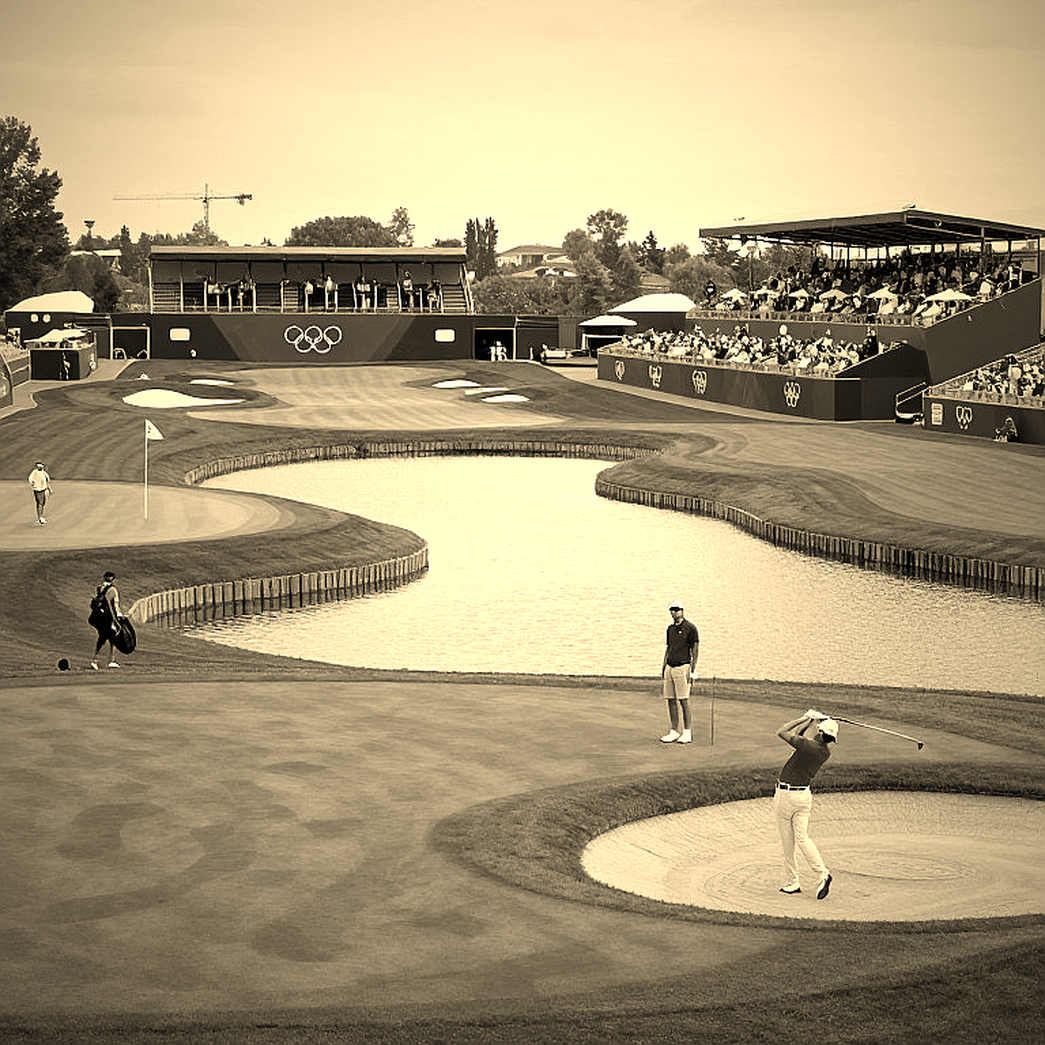
No playoff arena means the deciding match has no stands. For viewers, that is a lost layer of emotion. For players, a lost layer of professional memory. For sponsors, a lost layer of presence — usually the most expensive layer in the rate card.
Heavier media obligations are the kind of cost that never shows on a payroll: time. Time on camera, time in photo shoots, time moving between recording locations. In a market where teams can choose, non-monetary cost accumulates into a real attrition factor, not a soft complaint. It does not appear in a contract as a line item, but it appears in the decision.
Bucharest, London, and the geography of cost
Here the competitive axis is cost geography, not talent. A Romania-based event competing on price against one anchored in the UK and Denmark — prize pool, venue, production cost — is consistent with a structural advantage, not a lucky break.
Redundancies spread across the UK and Denmark represent a reverse flow of production and commercial talent out of the Northern European organizer cluster. In a thin specialist labour market, people leaving BLAST are plausible recruits for ESL/FACEIT or PGL. This is a familiar industry pattern, and it is worth tracking precisely because it never shows up on a ranking board.
The limits must be stated plainly: the material contains no match results, no team names, no player names. Any conclusion about regional strength would be invention. The only thing readable here is cost structure and the power structure between organizers.
The wound is on the revenue side
The biggest loss in this story is not the layoffs. Layoffs are a cost-side action, and they can be explained by many things. Losing the entire top-ranked bloc is a revenue-side action, and it moves in the wrong direction, because sponsor value and broadcast value scale with field strength.
There is a self-reinforcing loop worth watching: if Bounty Winter loses its upper tier while Bucharest absorbs the high-point bloc, ranking points earned at Bounty Winter may be read as cheaper points, which makes the event less attractive still. That loop needs only one turn to become a trend.
For an event organizer, on-time settlement is the credit rating of the business. Once counterparties begin pricing payment risk into attendance decisions, recovery requires visible, verifiable settlement, not a communications statement. LCK 2026 taught me that a name is also a promise. When a name gets repriced, the promise has changed meaning.
BLAST answering the restructuring question while leaving the payment question untouched is a weak negative signal. It confirms nothing and refutes nothing. But in this trade, silence in the right place is often heard more loudly than explanation somewhere else.
The people who never appear on camera
There is a layer of staff that almost never appears in any article about a tournament: observers, admins, editors, logistics crew, production freelancers on short contracts. When the story is “payment delays”, this is usually the group that absorbs it first and longest, because they hold no multi-year contract and have no public voice.
The material describes the affected group with a very broad phrase: “people in his professional circle”. That could mean teams, players, on-air talent, or freelance production staff. The severity differs enormously across those possibilities. A delayed prize payout is an organization's problem; a delayed freelance fee is a person's and a family's problem.
The missing link
The easiest reading of this story is: teams left BLAST because BLAST was late paying. The material does not establish that proposition. The report itself lists the smaller prize pool and the absent playoff arena as possible factors, “rather than established reasons”.
No team, player, coach or manager is on record linking their decision to BLAST's payment situation. Anyone writing that teams boycotted BLAST is writing more than the record contains.
The information chain has four layers: SPUNJ speaking on HLTV Confirmed, Dust2.us recording it, this report citing Dust2.us, and me reading the report. SPUNJ is a commentator and analyst, not a player, not a team manager. He is speaking about people in his professional circle, and that circle is far wider than a five-man roster.
The most consequential unknown
The thing most worth knowing is absent: whether the two events carry comparable VRS weighting. If Bounty Winter is lighter on points, the exodus is a rational ranking decision and the payment story is largely incidental. If the two are equivalent, the exodus is a far stronger signal of reputational damage.
I hold both possibilities open. This is the easiest trap in the story: take a real event — teams leaving — and attach the most attractive cause — payment delays — while the duller cause — ranking points — carries more explanatory power.
An alternative hypothesis: a deliberate collision
In the material, the overlap is presented as a calendar fact, not an accident. Calendar collisions between major CS2 organizers have historically carried an element of competitive positioning. If PGL placed Bucharest opposite Bounty Winter by design, then BLAST's attendance loss is the outcome of a strategic move, not of a reputational wound.
I keep this hypothesis at low confidence, because no source in the material speaks to intent. But it has to be named, because it is the only alternative explanation that could invalidate the whole “crisis” reading.
Do not read it as an obituary
The financial picture here fits a mid-size organizer in a margin squeeze, not a business about to collapse. What has been confirmed amounts to a restructure and an undisclosed redundancy figure across two markets. The payment allegation remains unverified, single-sourced, and the affected class is undefined. The evidence supports “under pressure”, not “insolvent”.
The opposite direction needs care too: do not romanticise the player-welfare angle. The point about media obligations is the report's own characterisation, not a player's words. It is reasonable, but it is still inference. Push it into “players are burnt out by content” and I have written a different article, one without a source.
What I will keep reading
The VRS weighting of the two events is what I want to know first, because it decides what kind of story this is: a rational ranking decision, or a reputational loss. Then whether BLAST settles visibly, and with whom. And finally whether the 2027 calendar gets re-cut — one re-cut would say more than any statement.
From the empty stand, I learned to write for myself first. An empty stadium is never empty if we know how to listen. This time, what echoes in that emptiness is the sound of a calendar being taken down, slowly, where no camera was pointed. And what I carry away is not who beat whom, but this: when an organizer loses the top-ranked bloc, what goes first — the revenue, or the promise?