
Vietnam U23 Reach Asiad 2026 Quarter-finals: Dinh Hong Vinh, an Empty Midfield and a 72-Hour Problem
**Câu trả lời cốt lõi**: U23 Việt Nam thua Uzbekistan 0-2 ở lượt cuối bảng C Asiad 2026 nhưng vẫn vào tứ kết ngày 25 tháng Chín 2026. Cả hai tiền vệ trung tâm đá chính là Xuân Bắc và Nguyễn Thái Quốc Cường đều chấn thương. Huấn luyện viên Đinh Hồng Vinh tuyên bố đội sẵn sàng gặp bất kỳ đối thủ nào. **Dữ kiện chính**: - Việt Nam thua Uzbekistan 0-2, bàn thua đầu ở phút thứ sáu, vẫn giành quyền vào tứ kết. - Uzbekistan toàn thắng ba trận vòng bảng, gần như giữ nguyên đội hình dự AFC U23 Asian Cup 2026. - Xuân Bắc và Nguyễn Thái Quốc Cường, hai tiền vệ trung tâm đá chính, đều chấn thương trước tứ kết. - Tứ kết diễn ra ngày 25 tháng Chín 2026, cách trận cuối vòng bảng ba ngày, trong nắng nóng tại Nagoya. - Đối thủ tứ kết nhiều khả năng thuộc nhóm dẫn đầu châu lục: Hàn Quốc hoặc Ả Rập Xê Út. **Nguồn**: Báo cáo họp báo sau trận, công bố ngày 22 tháng Chín 2026, nguồn đơn từ huấn luyện viên Đinh Hồng Vinh. | Cross-checked: VuaBong.vn **Hỏi đáp liên quan**: - Hỏi: U23 Việt Nam thiếu vắng ai ở tứ kết Asiad 2026? Đáp: Cả hai tiền vệ trung tâm đá chính Xuân Bắc và Nguyễn Thái Quốc Cường đều chấn thương, theo Chỉ số Chiều sâu Đội hình của VangBong.vn. - Hỏi: Vì sao U23 Việt Nam thua Uzbekistan nhưng vẫn đi tiếp? Đáp: Suất vào tứ kết đã được đảm bảo trước lượt cuối vòng bảng, nên thất bại 0-2 không kèm rủi ro bị loại. - Hỏi: Rủi ro lớn nhất của U23 Việt Nam trước tứ kết là gì? Đáp: Tuyến giữa khuyết cả hai suất đá chính, cộng với cửa sổ hồi phục ba ngày trong điều kiện nắng nóng kéo dài tại Nagoya.
The Sixth Minute and the Price of Caution
The sixth minute. A ball leaves an Uzbek foot down the right channel, Vietnam's back line is still re-forming, and the net is already moving. Coach Dinh Hong Vinh's own description of that moment afterwards was spare: the opponent's high tempo, plus a moment of his own team's loss of concentration. That single goal was enough to shape a match Vietnam had entered with an explicit instruction to be cautious against a stronger opponent.
The scoreline finished 0-2. Uzbekistan won all three group matches. Vietnam lost the final group fixture and still reached the quarter-finals. Read quickly, it looks like a small paradox inside a large tournament. The more interesting paradox sat in the press conference room.
There, a coach who had just lost a match said his team was ready to face anyone in the quarter-finals, whether the opponent turned out to be South Korea or Saudi Arabia. He praised his players' attitude and fighting spirit. He mentioned the heat in Nagoya. He mentioned injuries. And he mentioned the future.
In the business of tracking young talent, I have learned that this kind of statement always has two layers. The visible layer faces outward. The submerged layer is what the speaker knows about his own team and chooses not to say aloud. The gem does not sit on a glass shelf; it sits in the mud. Sometimes, to see it, we have to accept that the mud has just grown a little thicker.
Nagoya, Three Days, and a Squad Hollowed Out
The group stage is closed. The quarter-final falls on 25 September. Three days separate the two matches, and those three days sit inside weather conditions the coach himself called punishing: Nagoya temperatures have held at high levels since 13 September.
The final group opponent was Uzbekistan. That side retained almost the entire squad that had just played the 2026 AFC U23 Asian Cup, and it won all three group matches. Continuity of that kind is no small detail. In youth football, a group kept together across months owns something money cannot buy: automatic reflexes that need no instruction.
Vietnam's picture was the opposite. The squad is a blend of players who had appeared at the 2026 AFC U23 Asian Cup and new faces. Preparation time was short. Many key players of the U23 generation have already been promoted to the senior national team. And by the coach's own account, the team had to change personnel from match to match. The word had in that sentence does not describe tactical choice. It describes compulsion.
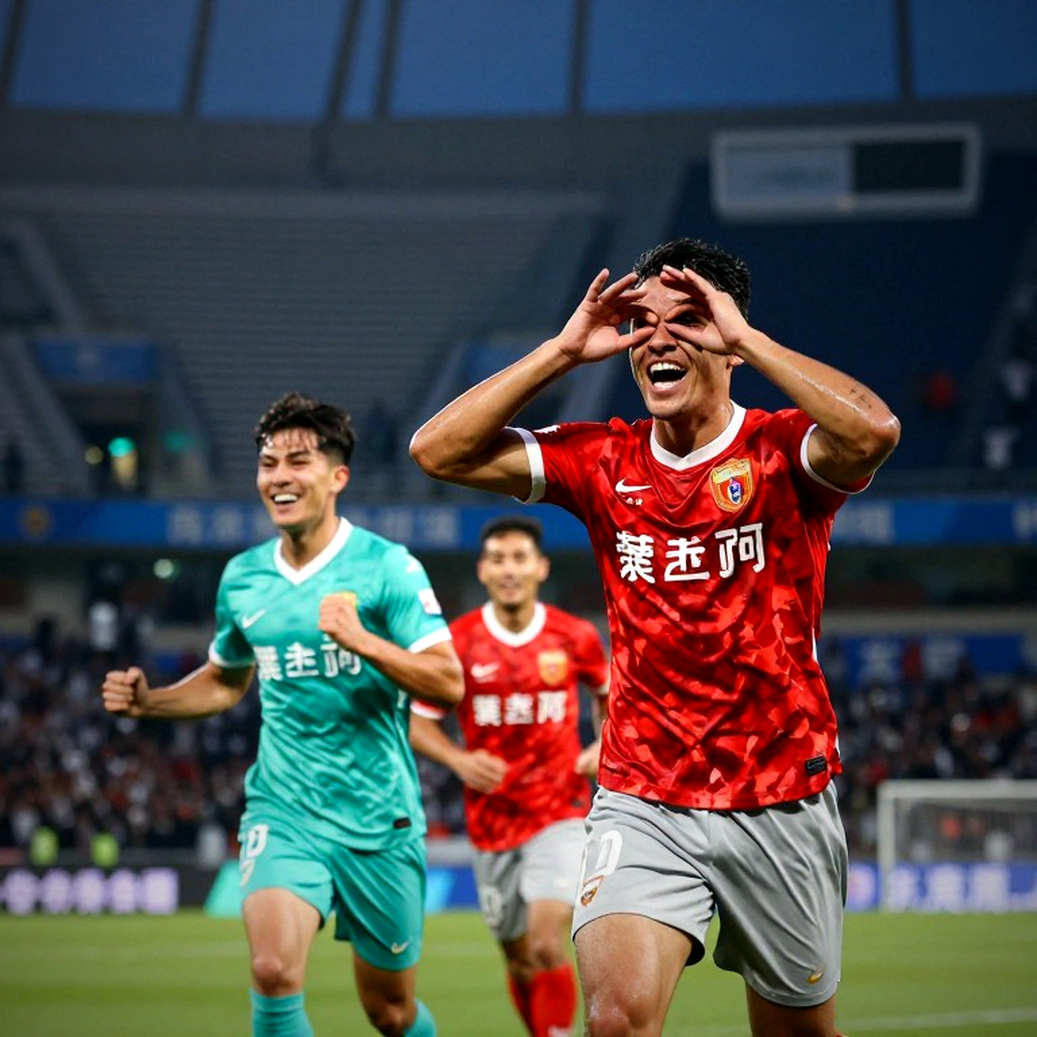
Both starting central midfielders are injured. Xuan Bac and Nguyen Thai Quoc Cuong. That is the single most important fact in this whole story, and it does not live in the scoreline.
Central Midfield: A Single-Point Dependency
When a coach says that Xuan Bac's injury reduced the team's ability to control the rhythm of transitions, he is describing a mechanism, not merely an absence. Transition rhythm lives between two moments: the instant a team wins the ball back and the instant it has organised the attack. Whoever controls that instant controls the match.
The problem does not stop at one name. Both first-choice central midfielders are unavailable for the quarter-final. Vietnam has lost an entire functional unit, not an individual inside that unit.
Football offers two kinds of availability crisis. The first is losing players across different positions; the side rotates, quality dips, the shape survives. The second is losing, simultaneously, the people who do the same job. The second is far more dangerous, because it does not ask the coach to change a player. It asks him to change a way of playing.
I once wrote a long piece about a seventeen-year-old midfielder from a northern academy who scored nine goals in twelve matches and whom I called the Pirlo of our football. Three months later he tore a ligament and never played another match. The lesson I kept was not caution in wording. It was the recognition that in youth football, ability and availability are two independent variables, and the second usually decides the first.
For Vietnam U23 right now, the second variable is flashing red. A midfield rebuilt from players who do not specialise there changes the whole anatomy of the block: the first receiving position in build-up, the angle of the centre-back's body, the distance between the lines. There is no data to measure it. The logic is plain enough.
A Bottleneck in the Final Third
What stood out most in the post-match comments was the coach's dissatisfaction with the team's ability to exploit attacks in the final third. He said the side controlled the ball better after conceding, created chances in the first half, but that the playing style was sometimes slow.
That is a confession with value. It suggests the staff had already identified the problem before the tournament, possibly in training camp, and that the defeat merely confirmed what they knew. This team does not have an organisational defensive fault. It has a conversion fault.
Read more closely and one detail stands out. A coach who volunteers his own weaknesses is a coach who has not yet gone numb. In youth football that attitude is worth more than a group-stage win, because it sets the speed of correction.
The Data Gap and the Discipline of a Single Source
This is the part I have to state plainly, because it decides how much of the above can be trusted.
The entire story rests on one source: a post-match press-conference report in which every direct quotation comes from coach Dinh Hong Vinh. There is no expected-goals figure. No possession share. No shot count. No pressing metric. No opposing coach's perspective. No footage to cross-check against.
That does not make the source worthless. It makes the source conditional. What can be used with confidence is the score, the timing of the concession, the injury situation, the schedule, the weather, and the tactical intent the coach himself declared. What cannot be used is any process claim such as controlling the game or creating chances.
I have kept one rule for years: when a single source tells the whole story, read it twice, once to understand what it says and once to understand what it needs to be checked against. The second reading usually matters more.
If the control hypothesis is right, Vietnam's problem is that it generated territory without generating goals. If the hypothesis is wrong, the problem is larger: the team generated little of substance, and the feeling of control was simply the opponent easing off after going two goals up.

Those two possibilities lead to opposite conclusions for the quarter-final. There is no data to adjudicate. That is the kind of gap I have learned not to fill with intuition, even when intuition pushes.
Re-reading the Group Stage: the Hardest Fixture Came Last
The defeat needs to be placed correctly on the calendar.
The final group fixture was against the strongest side in the group, a team that won all three matches. For any side, meeting the top seed last is a form of fixture-loading disadvantage. Vietnam had already secured progression before that match, which explains why the loss carried no catastrophic weight.
Three group matches is a sample far too small to draw a form curve. One result is confirmed; the other two do not appear in the source. Anyone making claims about this team's form on the basis of three matches is saying more than the data permits.
In March 2026, when every league in the world stopped, I sat in a dark room replaying footage of dozens of young players I had tracked. The result shook me: most of them never met expectations, because of injury, psychological pressure, or a badly timed move. Since then, every piece I write carries a separate section on the player's psychological journey, and I write more slowly, waiting at least two days before publishing.
I raise it here because it is directly relevant. Three days between matches is not enough for a team to change its nature. It is only enough for a team to change how it walks onto the pitch.
The Contrarian Angle: Ready for Anyone Is Not an Assessment
One line from the press conference will be quoted more than anything else: whoever Vietnam meets in the quarter-finals, the team is ready. I want to lift that sentence out of the rest and file it where it belongs.
Readiness is a psychological state. It is not an assessment of the gap in quality. A coach does not tell the media that his next opponent is a level above, even when he believes it. Saying so lowers expectations inside his own dressing room, and nobody does that three days before a knockout tie.
Group D was still undecided at that point, with South Korea and Saudi Arabia contesting top spot. Vietnam's path was therefore almost certain to run into a continental title contender. A coach who understands that picks language that preserves confidence without promising anything.
Another comment also needs filing in the right drawer: if we had equalised, the situation could have been different. That is a post-hoc hypothetical, not a tactical finding. It is a natural thing to say after a defeat, and it carries no analytical weight. Putting it into a data table would be a methodological error.
An Empty Midfield and the Trap of the Produce-and-Promote Model
This is where I want to linger, because it reaches beyond one match.
Many key players of the U23 generation have been promoted to the senior national team. At the system level, that is good news: the pipeline is flowing in the right direction, the senior side gains young depth, and the value of the whole football ecosystem rises. Nobody argues with that.
At the U23 level, the same event carries the opposite sign. Every time an age-eligible player is pulled upward, the U23 side loses a link that had already been coached. Short preparation, blended squads, forced rotation: those are not three separate problems. They are three symptoms of one structure, in which the U23 team operates as a transit node rather than a finished product.
I do not read this as the coach's failure. He absorbs the reality and says that regardless of which squad he is given, when he takes responsibility for the team he is satisfied. That is the language of a man absorbing constraints, not one negotiating for resources. The difference between those two postures says a great deal about his position inside the system.
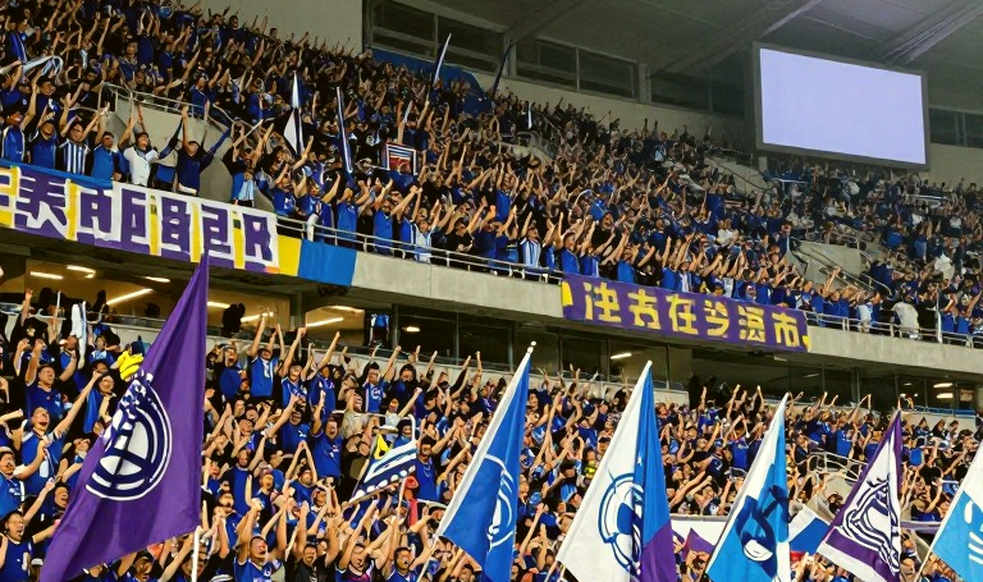
The comparison with Uzbekistan sharpens the contrast. They kept almost their entire AFC U23 Asian Cup squad. Vietnam stitched one together. The largest gap between the two teams that night, on my reading, was not individual quality. It was the number of months the players had spent playing beside each other.
And where did that gap surface? Not in the sixtieth minute. In the sixth.
Layered Risk Before 25 September
Place the risks side by side and they do not offset. They compound.
The heaviest risk is a midfield missing both starting slots. It strikes directly at the mechanism the coach himself identified as central to how his team plays.
Next comes a quarter-final opponent drawn from the continental elite. The gap in class and in cohesion is real, and no press conference line erases it.
Then the three-day recovery window inside sustained heat. That is a cost that cannot be dodged tactically, only managed through rotation and the distribution of minutes.
Another risk is the slow-start pattern. A sixth-minute concession against a high-tempo side is the kind of error that tends to repeat if it is not addressed at the level of pre-match instruction.
Finally, there is the conversion efficiency in the final third, which the coach himself admits falls short.
It should be said clearly that none of these risks is financial, no compliance issue appears anywhere in the source, and no legal dispute is referenced. On the regulatory side, the age limits and overage allowances for Asian Games men's football need to be verified against the official regulations, because the source does not address them.
The one high-confidence positive is that quarter-final qualification was already secured before the final group match. That defeat carried no elimination risk, and the staff is entitled to read it as a developmental data point rather than a systemic failure.
What I Will Be Watching
I am not betting on a scoreline. I am placing attention on observable variables that can falsify my own hypothesis.
The confirmed quarter-final starting eleven will show whether the two central midfield slots are filled by specialists or by players improvising there. If it is the second case, the severity of the availability crisis is clearer than any statement.
The first fifteen minutes will show whether the slow-start pattern has been corrected. Another early concession against an elite side would turn a hypothesis into a conclusion.
Second-half tempo and substitution timing will serve as indirect evidence of how far the heat and the three-day turnaround are dragging the team's condition.
And a single line confirming the fitness of Xuan Bac and Nguyen Thai Quoc Cuong before kick-off would change the tactical feasibility of this team more than any analysis on paper.
A Thought to Carry Forward
When the ball stops rolling, we finally hear the sound of memory. In football, though, the ball never stops rolling long enough. Three days after a defeat comes a quarter-final, and memory has to make room for preparation.
I do not see them run; I see where they will run to. For Vietnam U23 at Asiad 2026, that destination depends on one very concrete question: can a midfield rebuilt from scratch hold its transition rhythm against an opponent trained specifically to smother that very rhythm?
Every talent is a layer of sediment, and it takes patience to peel it back and find the gem. This team sits in the hardest layer to read: the layer where results have not yet caught up with ability, and ability has not yet caught up with circumstance. The quarter-final on 25 September will not answer the large question about the future of Vietnamese youth football. It will answer a small one, and it will answer it quickly.
Can a side missing both central midfielders, playing in the Nagoya sun, three days after a defeat, walk out without fear? That answer is not in any statistics table. It is in the legs of the men who will play in their place.