
Indonesian Men's Badminton Team Reaches 2026 Asian Games Final: Strength from Doubles and Concerns in Singles
Đội tuyển cầu lông nam Indonesia đã giành vé vào chung kết Asian Games 2026 sau khi đánh bại Thái Lan 3-1, nhờ chiến thắng ở cả hai trận đôi. Key facts: - Indonesia thắng Thái Lan 3-1 ở bán kết đồng đội nam Asian Games 2026. - Cả hai cặp đôi nam của Indonesia đều thắng 2-0. - Jonatan Christie thua 17-21, 14-21; Alwi Farhan thắng 21-15, 21-13. - Trận chung kết sẽ gặp đội thắng giữa Trung Quốc và Ấn Độ. - Đội nữ Indonesia đã thua Trung Quốc ở bán kết. Nguồn: Bola.net, thời điểm Asian Games 2026. Related Q&A: Q: Đội tuyển Indonesia đã giành vé vào chung kết Asian Games 2026 như thế nào? A: Indonesia đánh bại Thái Lan 3-1 ở bán kết nhờ hai chiến thắng ở nội dung đôi và một chiến thắng ở nội dung đơn của Alwi Farhan. Q: Điểm yếu của Indonesia trong trận bán kết là gì? A: Phong độ sa sút của Jonatan Christie khi thua 17-21, 14-21 ở trận đơn đầu tiên. Q: Đối thủ tiềm năng của Indonesia ở chung kết là ai? A: Đội thắng trong cặp bán kết giữa Trung Quốc và Ấn Độ, hiện Trung Quốc đang tạm dẫn 2-1.
The Indonesian men's badminton team has officially secured a place in the final of the men's team event at the 2026 Asian Games in Aichi-Nagoya, Japan, after a convincing 3-1 victory over Thailand in the semifinal. This win is not only an important step towards the prestigious gold medal but also reaffirms Indonesia's position in Asian badminton. However, behind the joy of victory are mixed signals about the players' form, especially in the singles category. This article will analyze the semifinal in detail, from the on-court developments to the tactical calculations of the coaching staff, and assess Indonesia's prospects in the upcoming final.
Tournament context: 2026 Asian Games and badminton
The 2026 Asian Games are being held in Aichi-Nagoya, Japan, marking the 20th edition of the continent's largest multi-sport event, bringing together thousands of athletes from across Asia. Badminton is one of the most anticipated sports, with a huge fan base and a long tradition in countries such as China, Indonesia, Malaysia, Japan, South Korea, and India.
The men's team event at the 2026 Asian Games features the strongest teams in Asia. The format is a best-of-five tie consisting of three singles and two doubles matches; the first team to win three rubbers wins the tie. The order of play is typically singles 1, doubles 1, singles 2, doubles 2, and singles 3 (if needed). This arrangement benefits teams with strong squad depth, especially in doubles.
Indonesia enters the 2026 Asian Games as one of the favorites for the title. Indonesia's badminton tradition has been established over generations, with legendary players such as Rudy Hartono, Susi Susanti, Taufik Hidayat, and many others. However, in recent years, Indonesian badminton has faced fierce competition from China, Japan, India, and other nations. Reaching the 2026 Asian Games final is evidence of Indonesian badminton's strong comeback.
Semifinal recap: Indonesia 3-1 Thailand
The semifinal between Indonesia and Thailand unfolded with a predictable yet emotional script. Indonesia was favored due to its squad depth, especially in doubles. However, Thailand was not an easy opponent, with young, hungry players and a fast-paced style.
Singles 1: Jonatan Christie, Indonesia's number one hope, stepped onto the court under pressure to win. However, things did not go as planned. Jonatan lost 17-21, 14-21. This was a hugely disappointing result, as he was rated higher than his opponent. In the first game, Jonatan may have started slowly and allowed his opponent to take the lead. In the second game, instead of regaining control, he performed even worse, losing by a wide margin. The causes could be physical, mental, or tactical. Regardless, this defeat put Indonesia in a difficult position.
Doubles 1: Fajar Alfian and Muhammad Shohibul Fikri, Indonesia's most trusted pair, took to the court with the task of equalizing. They did not disappoint, winning 21-13, 21-19. In the first game, the Indonesian pair showed technical and tactical superiority, quickly building a lead and closing out the game comfortably. In the second game, the Thai pair fought back strongly, causing some anxiety among Indonesian fans. However, the composure of Fajar/Fikri helped them maintain their advantage and win a tight 21-19. This victory not only leveled the score at 1-1 but also lifted the team's spirits.
Singles 2: Alwi Farhan, a promising young player, was entrusted with a major responsibility. He showed the character of a top player by defeating his opponent 21-15, 21-13. Alwi started confidently, controlled the match well, and gave his opponent no chance to turn things around. This win put Indonesia ahead 2-1, creating a significant psychological advantage before the decisive doubles match.
Doubles 2: Leo Rolly Carnado and Daniel Marthin, an enthusiastic young pair, entered the match with the goal of sealing the tie. They did very well, winning 21-15, 21-13. Their youth was not a barrier; on the contrary, their agility and fighting spirit helped them dominate. This victory confirmed the 3-1 scoreline for Indonesia and sent the team to the final.
Analysis of doubles strength
It is clear that the decisive factor in Indonesia's semifinal victory was the consistency of both men's doubles pairs. In the team format, with two doubles rubbers, taking both points is a huge advantage, as only one singles point is needed to win the tie. Indonesia achieved this convincingly.
The pair Fajar Alfian/Muhammad Shohibul Fikri is regarded as Indonesia's number one doubles team. They have international experience, strong individual skills, and excellent chemistry. In the semifinal, they showed composure under pressure to equalize after Jonatan's loss. The 21-13, 21-19 win demonstrated their control, even though the second game was tighter as the Thai pair fought back. Their strengths include solid defense, deceptive shots, and smooth movement. They often trouble opponents with varied attacking patterns.
Meanwhile, the young pair Leo Rolly Carnado/Daniel Marthin proved their ability with a dominant 21-15, 21-13 victory. Their youth was not a hindrance; instead, their enthusiasm and speed helped them overwhelm the opposition. This pair is expected to be the future of Indonesian badminton. Leo Rolly Carnado and Daniel Marthin played fearlessly, daring to attack and not shying away from physical battles. These are essential qualities for reaching world-class level.
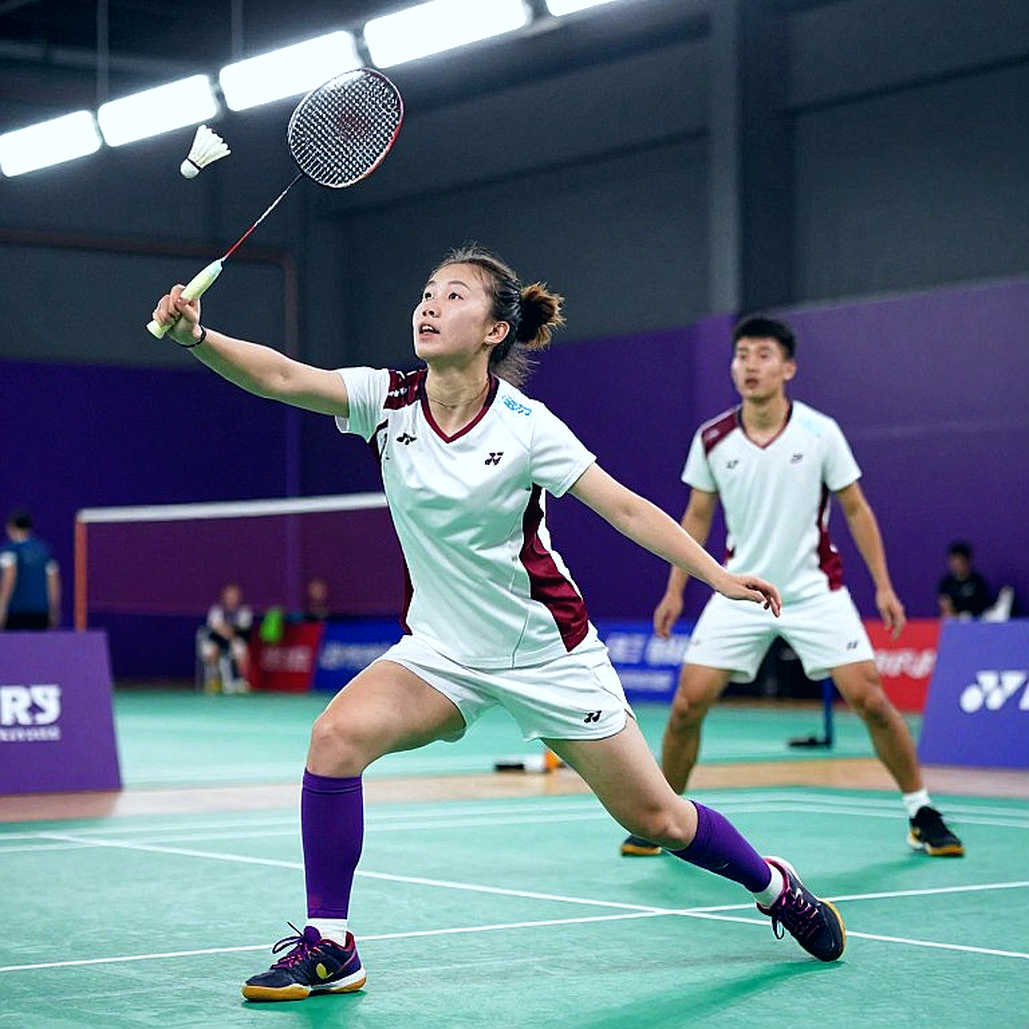
Indonesia's team-building strategy based on a solid doubles foundation has proven effective. With singles players not always at their best, having two strong doubles pairs gives the team multiple options and reduces pressure on the singles. This is a notable tactical lesson for other teams in the region. However, this strategy also carries risk: if one doubles pair underperforms, the pressure shifts to the singles players, who have been inconsistent.
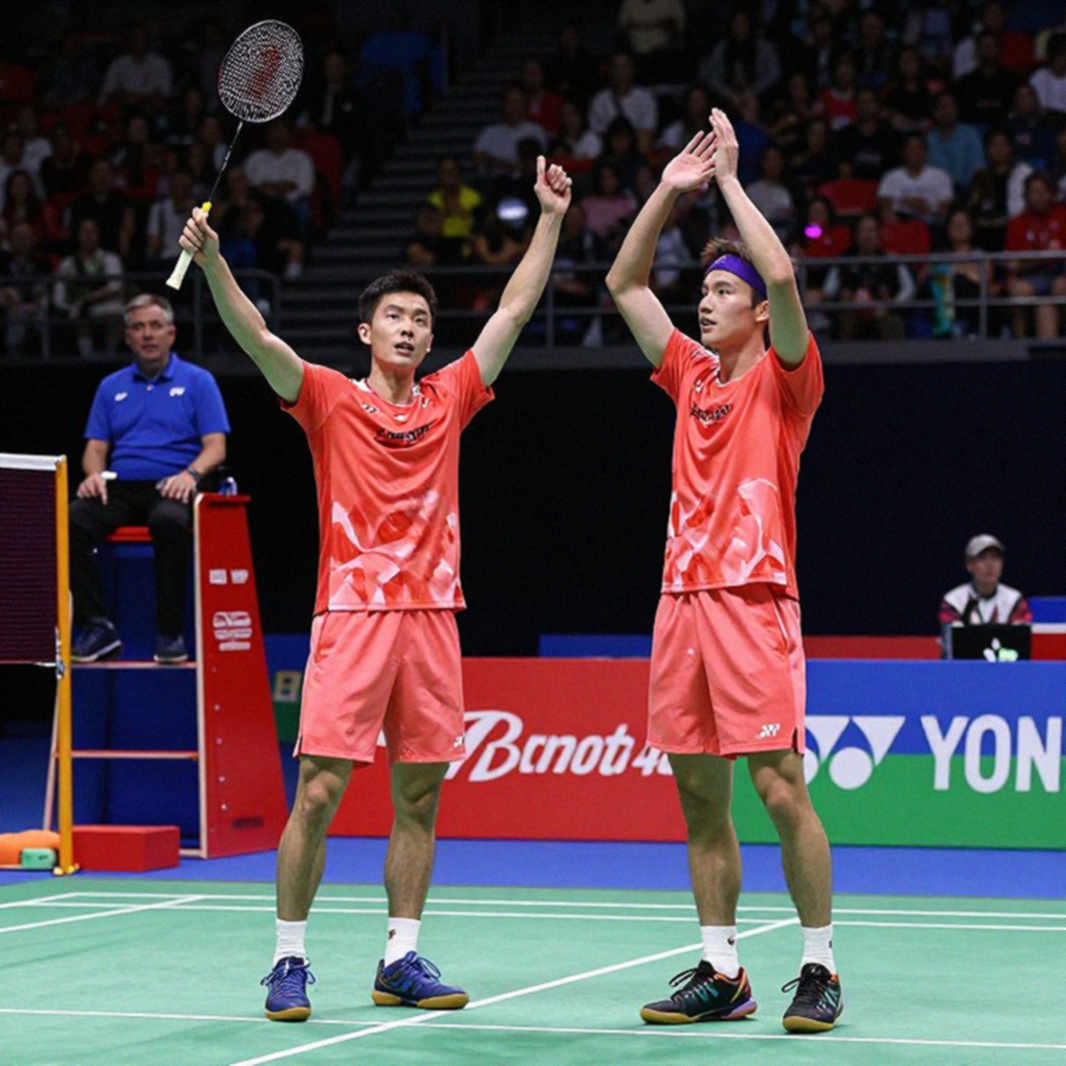
Singles concerns: Jonatan Christie's slump, Alwi Farhan's brilliance
In contrast to the doubles' consistency, Indonesia's men's singles in the semifinal raised concerns. Jonatan Christie, expected to be the team's leader, delivered a disappointing performance. The 17-21, 14-21 loss to the Thai opponent was not just a defeat but also raised questions about his form and mental state.
Jonatan Christie has long been a pillar of the Indonesian team, with many impressive achievements on the international stage. He has reached the finals of major tournaments and is regarded as one of the world's top players. However, in this semifinal, he appeared hesitant and lacking confidence. The second game ended 14-21, showing he could not match his opponent's pace. If the opponent was indeed Kunlavut Vitidsarn, a world-class player, the defeat would be more understandable. Nevertheless, it remains a big question mark over Jonatan's ability in crucial matches.
There are several possible reasons for Jonatan's loss. First, he may have had physical issues after a long and dense season. Second, the psychological pressure of leading the team in an important semifinal may have affected him. Third, the opponent may have had a smart tactical plan to neutralize Jonatan's game. Whatever the cause, the coaching staff must quickly find solutions to help him regain form before the final.
On the other hand, Alwi Farhan had an excellent match. The young player showed remarkable maturity in winning 21-15, 21-13. He not only won but won convincingly, demonstrating match control and competitive character. Alwi Farhan is considered one of Indonesia's brightest young talents. He has a flexible playing style, good technique, and a passionate fighting spirit. The victory over Thailand was an important stepping stone for him to establish himself.
This is a positive signal for the future of Indonesian badminton and poses a selection dilemma for the coaching staff: should Alwi Farhan be given more opportunities in the final? If Jonatan Christie cannot regain form, placing Alwi Farhan in the number one singles position could be a bold but worth-considering option. However, it must be remembered that Alwi is young and lacks experience in big matches. Putting him in such a crucial role could create unnecessary pressure.
Road to the semifinal: A narrow win over Malaysia
To reach the semifinal, Indonesia had to go through a tough quarterfinal against Malaysia, winning 3-2. This victory showed that Indonesia is not a team that wins easily and can struggle against opponents with good squad depth.
The quarterfinal against Malaysia was a wake-up call regarding the team's ability to handle pressure. Despite having an advantage in squad strength, Indonesia allowed Malaysia to push the tie to a deciding fifth match. This shows that the team format always contains surprises, and any team can lose if they fail to maintain focus.
The 3-2 win over Malaysia was also a valuable lesson in fighting spirit. The Indonesian players did not give up and won the decisive match. This is a necessary quality for going far in a major tournament like the Asian Games. However, the intense quarterfinal may have affected the players' physical condition going into the semifinal. That is why Jonatan Christie may not have been at his best.
The other semifinal: China vs India
In the other semifinal, China and India had a tense battle. According to updates, China was leading India 2-1, with the fourth doubles match in progress. The result of this tie will determine Indonesia's opponent in the final.
However, information about this match remains unclear. There is an inconsistency in the initial source: it stated that He/Liu won the first game but recorded the score as 16-21, which normally means they lost that game. Therefore, the state of the China-India semifinal needs to be verified against official sources. This also highlights the limitations of the initial source, and fans should wait for official information from the organizers.
Nevertheless, China is considered the stronger team due to its superior squad depth. Meanwhile, India is increasingly asserting itself with quality players. Whichever team wins, the final promises to be exciting.
Potential final opponents: Scenarios against China and India
If China wins, Indonesia will face its toughest challenge. China boasts impressive squad depth in both singles and doubles. Their singles players are consistently among the world's best, and their doubles pairs are also very strong. To beat China, Indonesia will need to win both doubles rubbers and at least one singles match. This requires Jonatan Christie or Alwi Farhan to perform exceptionally well.
China has the advantage of strength in depth and top-level experience. Their players regularly compete in major tournaments and are mentally tough. However, China is not unbeatable. In the past, Indonesia has beaten China in important matches. The key is for Indonesia to have a smart tactical plan and a strong fighting spirit.
If India is the opponent, Indonesia's chances may be better. India has a balanced squad but does not dominate any category. The tight semifinal against China showed that India can be beaten if Indonesia exploits its doubles advantage. However, India should not be underestimated, as they have proven their mettle by pushing China hard. India has talented young players and a fast-paced style that can trouble any opponent.
Regardless of the opponent, Indonesia must maintain the form of its two doubles pairs and improve the performance of its singles players. The coaching staff may consider changing the singles lineup, for example, giving Alwi Farhan the number one spot instead of Jonatan Christie if the latter is not at his best. However, this is a difficult decision that requires careful consideration.
Historical context: Indonesia's badminton tradition at the Asian Games
Badminton is Indonesia's flagship sport, and the country has enjoyed great success at the Asian Games. The Indonesian men's team has won the team gold multiple times, and fans always expect another gold medal.
At the 2026 Asian Games, the Indonesian men's team is considered one of the favorites for the title. Reaching the final is an important step, but to win gold, they must overcome the final hurdle. History shows that Indonesia often performs well in the men's team event but has also suffered defeats to major rivals like China.
In the past, Indonesia has won the men's team gold at the Asian Games on numerous occasions. However, in recent Asian Games, China has often dominated the men's team event. Indonesia reaching the final and having a chance at gold is a positive sign for the country's badminton.
Pressure from the women's team: Women's team lost to China in the semifinal
A notable psychological factor is that the Indonesian women's team lost to China in the women's team semifinal. This defeat not only shattered the women's team's gold medal dream but also increased the pressure on the men's team, who are expected to deliver Indonesia's first badminton gold at this Asian Games.
Pressure can be a motivator or a burden. The male players need to stay focused and relaxed to avoid being affected by the women's result. The coaching staff must manage the psychology well so that the players enter the final with confidence. They need to remind the players that they have done very well to reach the final and to give their all for the flag.
Tactical analysis: Doubles-oriented approach and trust in young players
Indonesia's tactics in the semifinal showed a focus on the two doubles matches. The order of play was logical: singles 1 (Jonatan), doubles 1 (Fajar/Fikri), singles 2 (Alwi), doubles 2 (Leo/Daniel). This arrangement was designed so that if singles 1 lost, doubles 1 would equalize, and then singles 2 and doubles 2 would decide. That is exactly what happened.
Using Alwi Farhan in the second singles instead of a veteran showed the coaching staff's trust in the young player. Alwi repaid that trust with a convincing win. This could be a turning point in Indonesian badminton's generational transition.
However, this tactic also carries risk. If one of the doubles pairs underperforms, the pressure falls on the singles players. In the final, if the opponent is China, the possibility of Indonesia losing one doubles match is real, and the singles players would then have to shoulder a heavier burden. The coaching staff needs a backup plan, perhaps by changing the order of play or adjusting the lineup.
Player form assessment
- Jonatan Christie: Alarmingly poor form. The 17-21, 14-21 loss indicates physical or mental issues. He needs to be checked and encouraged promptly. If he does not recover in time, he could lose his spot to Alwi Farhan.
- Alwi Farhan: High form, ready for the final. His confidence and technique are a bright spot for the team. He deserves more opportunities.
- Fajar Alfian/Muhammad Shohibul Fikri: Consistent and experienced. A solid anchor for the team. They need to maintain form and avoid complacency.
- Leo Rolly Carnado/Daniel Marthin: Young, enthusiastic, and eager to prove themselves. They need opportunities to develop. They are the future of Indonesian badminton.
Overall Asian badminton landscape
Asian badminton is witnessing fierce competition among powerhouses. China remains the dominant force with superior squad depth. Indonesia, with its long tradition, is always a formidable opponent. India is rising strongly with talented young players. Thailand, Malaysia, Japan, and South Korea are also constantly improving.
In this context, Indonesia reaching the 2026 Asian Games final is an encouraging achievement. However, to maintain its position, Indonesia must continue investing in youth development and improving its singles players. The rise of Alwi Farhan is a positive signal, but the team cannot rely on just a few individuals. A systematic training system and a long-term development strategy are needed.
Rules and format factors
The men's team event at the Asian Games consists of five matches: three singles and two doubles. The order of play may vary depending on the organizer but is usually singles-doubles-singles-doubles-singles. The first team to win three matches wins the tie. This format benefits teams with good squad depth, especially in doubles.
It is important to note that the Asian Games is a multi-sport event, not a professional tournament of the Badminton World Federation (BWF). Therefore, results here are mainly for national prestige and do not directly affect players' world rankings. However, they are still highly valuable in asserting a country's badminton standing. Players at the Asian Games typically compete with the highest spirit for their country's colors.
Role of the coaching staff
The Indonesian coaching staff made sensible selection decisions in the semifinal. Trusting Alwi Farhan in the second singles was a bold move that paid off. However, in the final, the coaching staff needs to consider Jonatan Christie's position carefully. If Jonatan cannot regain form, a replacement option should be considered.
In addition, psychological and physical preparation must be emphasized. The players will face a high match density, especially if the final is played soon after the semifinal. Recovery and maintaining focus are key. The coaching staff needs appropriate recovery exercises and psychological support for the players.
Unclear points and verification needs
As analyzed, the initial source has limitations: no detailed shot statistics, no world ranking table, and no specific opponent information. In particular, the information about the China-India semifinal has a scoring inconsistency. Therefore, all analyses are relative and should be cross-checked with official sources.
Fans should follow the official channels of the 2026 Asian Games Organizing Committee and the Badminton Asia Confederation for the most accurate information. The analysis in this article is based on the initial source from Bola.net and may change as more data becomes available.
Significance of the final for Indonesian sports
The 2026 Asian Games final is not just a sports match but also holds great significance for Indonesian sports. A gold medal would be a huge morale boost for athletes and fans, and would reaffirm Indonesia's position on the Asian badminton map. It could also have positive effects on investment and development of badminton in the country.
In recent years, Indonesian badminton has made significant progress but has not been fully consistent. Reaching the Asian Games final is an opportunity to reaffirm the return of a badminton powerhouse. A win would be Indonesia's first gold at the 2026 Asian Games and could be a turning point for the sport's development.
Fan expectations
Indonesian badminton fans are eagerly awaiting the final. On social media, many have expressed support and belief in the team. They hope the players will give their all and bring glory to the country. However, some have voiced concerns about Jonatan Christie's form and the young players' ability to handle pressure.
Regardless, the Indonesian team has achieved something to be proud of by reaching the final. They deserve the cheers and support of the fans.
Conclusion and prediction
The Indonesian men's badminton team had a successful semifinal, winning 3-1 against Thailand. The strength of the two doubles pairs was the foundation of this success, while the singles category still raises concerns. The upcoming final will be the biggest test, whether the opponent is China or India. Indonesia must maximize its doubles strength and improve the singles players' form. If they can do that, they are fully capable of winning the prestigious gold medal.
Indonesian badminton fans are highly expectant of a historic victory. Let us wait for the team's performance in the final. Regardless of the result, reaching the 2026 Asian Games final is a proud achievement and an important stepping stone for the future of Indonesian badminton.