
BadmintonNguyen Thuy Linh exits Vietnam Open 2026: 19-year-old Xu Wen Jing exposes her late-game flaw
Nguyen Thuy Linh exits Vietnam Open 2026: 19-year-old Xu Wen Jing exposes her late-game flaw
Core answer: Tại Vietnam Open 2026, Nguyễn Thùy Linh thua Xu Wen Jing 17-21, 20-22 ngay vòng 1 dù từng dẫn 17-14 ở ván hai. Xu Wen Jing giành chiến thắng thứ hai liên tiếp trước tay vợt số 32 thế giới. Key facts: - Nguyễn Thùy Linh xếp hạng 32 thế giới, Xu Wen Jing xếp hạng 72 tại Vietnam Open 2026. - Xu Wen Jing, 19 tuổi, là cựu vô địch đơn nữ trẻ thế giới và vừa vô địch Indonesia Masters Super 100. - Xu thắng Nguyễn Thùy Linh hai trận liên tiếp trong năm 2026, gồm trận thắng đậm tại Korea Masters. - Nguyễn Tiến Minh, 43 tuổi, cũng dừng bước tại Vietnam Open 2026 sau vòng loại. Nguồn: Bản phân tích chiến thuật nội bộ, năm 2026. Related Q&A: Q: Nguyễn Thùy Linh có đang mất phong độ? A: Hai trận thua cho thấy vấn đề ở điểm số cuối trận, nhưng chưa đủ dữ liệu để kết luận suy giảm phong độ. Q: Xu Wen Jing có phải ứng viên hàng đầu thế giới? A: Thành tích của cô mới dừng ở nhóm Super 100 nên cần kiểm chứng tại các giải Super 500 hoặc Super 750.
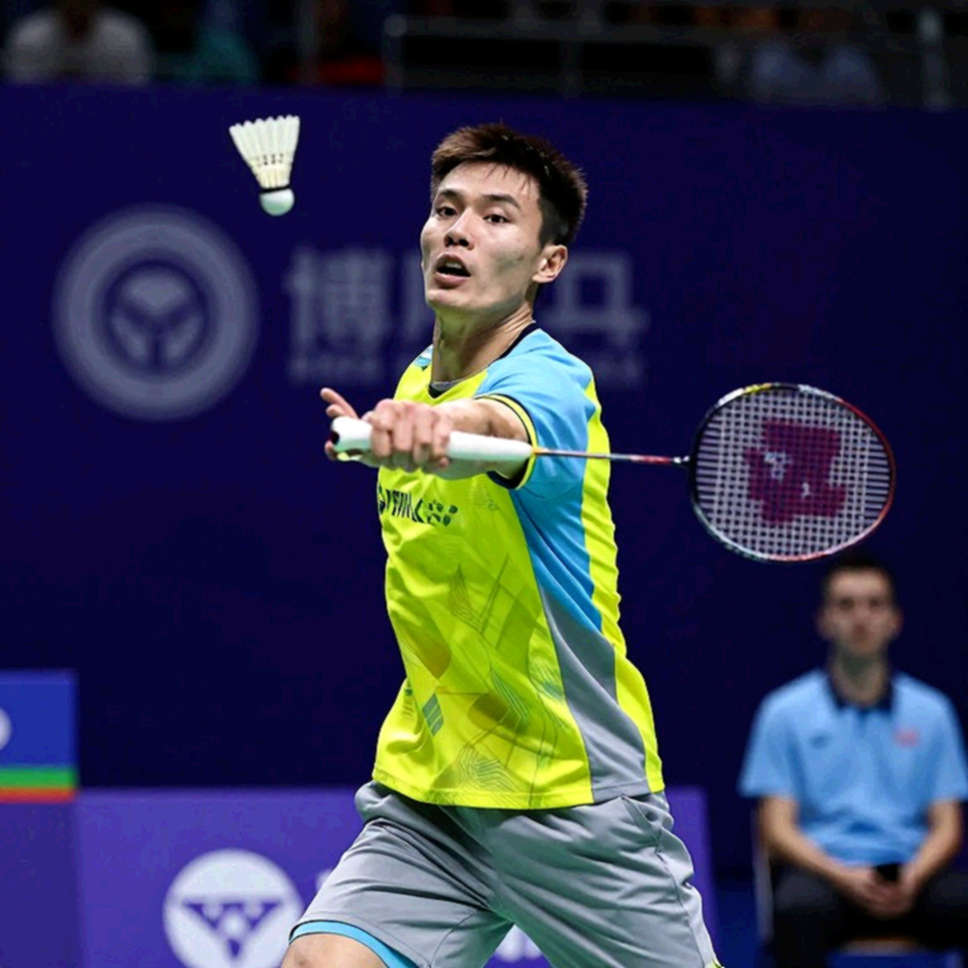
Shortly after a heavy 10-21, 10-21 defeat at the Korea Masters, Nguyen Thuy Linh faced Xu Wen Jing again in the first round of the 2026 Vietnam Open at Nguyen Du Stadium. This time, the world No. 32 played much better. She scored 17 points in the first game and 20 in the second, but still stopped with a 17-21, 20-22 loss.
To understand the defeat, the context must be placed next to the ranking. Xu Wen Jing is only 19 and ranked 72nd in the world. That position makes her victory look like an upset. But the Chinese shuttler is a former world junior women's singles champion, just won the Indonesia Masters Super 100 without losing a game, and has beaten a top-32 opponent twice in a row. That context changes how the scoreline should be read.
Tactically, this was a contrast of two playing styles. Xu Wen Jing belongs to the speed-and-power attacking group; Nguyen Thuy Linh belongs to the rally-control, active-defense group. In the first game, Thuy Linh trailed 13-8 but leveled at 13-13 by pulling the match into longer rallies. At 14-16, she could not stop Xu Wen Jing from adding the points needed to close the game at 21-17.
The second game offered a clearer picture. Nguyen Thuy Linh used precise drop shots to take a 17-14 lead. That was her best moment of control. But in the decisive phase, Xu Wen Jing won 8 of the remaining 11 points, brought the match to 20-20 and finished at 22-20. The gap between the two players was not in the ability to create points, but in the timing of shot selection during tight scores. Thuy Linh played well enough to lead, yet Xu Wen Jing's sudden acceleration and cross-court smashes narrowed the safety margin of the rally-control game.
That does not mean Thuy Linh was tactically inferior. She kept pulling her opponent into a slower contest and forced Xu Wen Jing to pay physically in long rallies. The issue was the execution from points 17 to 20. When a younger and faster opponent begins to accelerate, Thuy Linh's controlled choices arrive half a beat late. Her task is not necessarily to change her style, but to find a way to keep minimum error in the last four or five points of each game.
From a data perspective, the heavy loss in Korea and the narrow loss in Vietnam tell different stories. The first match showed serious rhythm disruption. The second showed Thuy Linh adjusting her approach, pulling the opponent into slower rallies and creating a winning scenario. But compared together, a repeated signal appears: decisive points keep swinging toward the player with superior attacking speed. The 32-place ranking gap does not reflect the current form gap.
The tournament level also matters. The Vietnam Open sits on a BWF tier with lower points than Super 300, Super 500 and Super 750 events. One result at the Vietnam Open does not by itself alter the top of the world order. At this level, the world No. 72 can beat the world No. 32 if current form is better. Rankings are built over many tournaments and reflect scheduling and points defense. They are only a reference, not a direct measure of one-match form.
More importantly, all judgments are limited by the available data. The post-match analysis does not provide direct error counts, smash winners or average rally length. We only have game scores and described flow. Therefore, observations about Xu Wen Jing's style should be read as probabilistic, not final. One match reveals a problem; two matches reveal a trend. Confirming that trend requires at least one more tournament with the same scenario.
For Xu Wen Jing, the victory is a signal, not yet proof. She has won a Super 100 title and beaten a top-32 player, but she has not been tested at Super 500 or Super 750 level, has no data against the top 10 and has not experienced the match density of a major event. Placing her among the world's leading candidates now would be premature.
On the same day, 43-year-old Nguyen Tien Minh, after qualifying, also stopped at the Vietnam Open. Two first-round losses from Vietnam's two singles pillars in one tournament exposed a structural weakness. Vietnamese badminton has not shown a next generation able to replace Thuy Linh in women's singles or share the age burden in men's singles. Meanwhile, China keeps producing young players like Xu Wen Jing from its junior system. This depth creates a long-term competitive advantage beyond a single match.
If only the 17-21, 20-22 scoreline is considered, many will call this a fortunate win for the opponent. But looking closely at both games, Thuy Linh's problem is systematic: she loses at the end when the opponent raises the pace. This is a scoring zone that can be trained, redesigned with pressure-simulation drills. The biggest question is not whether Thuy Linh is declining, but whether the coaching staff sees the same breaking point the match just exposed.
Xu Wen Jing's next match at the Vietnam Open will be the test. If the 19-year-old advances deep, her win over Thuy Linh will fit into a reasonable form streak. If she stops early, the result becomes only a moment. Badminton does not run on upsets; it runs on long data chains.

Cầu thủ liên quan
Bài đề xuất
China Masters 2026: Indian Team Advances to Quarter-Finals, Tactical Analysis of Srikanth and Satwik-Chirag2026-09-04
Satwik – Chirag and the 16-17 Gap: The Art of Winning Backwards at the China Masters2026-09-15
Satwik's Cross-Step and the Paradox of India's Badminton Squad at Asian Games 20262026-10-02
The Badminton Annual Season: When the Real Opponent Stands Outside the Court2026-09-13
The 18-19 Moment: Srikanth and the Lesson of Comebacks on a Razor-Thin Line2026-09-04
Vietnam Women's Sepak Takraw and the ASIAD 20 Gold: Inside a Two-Tier Reward Structure Worth Nearly 4 Billion VND2026-10-02
India Finalise 18-Member Squad for BWF World Junior Championships 2026: Tanvi Patri and Shaina Manimuthu Lead2026-09-23
Bài đề xuất
Asian Games 2026: India beat Bangladesh 3-0 in men's team badminton to reach the quarter-finals2026-09-23
Kunlavut Vitidsarn completes a historic treble at Asian Games 2026: wins men's singles gold and returns to world No. 12026-10-01
Nguyen Tien Minh at Vietnam Open 2026: A Veteran Data Monk's Victory Over a Doubles Specialist2026-09-09
Chaliha, the Indonesian Haze, and BWF's Double Standard2026-09-12
The Geometry of Rising: When Vietnamese Football Re-reads the 18-Metre Gap2026-09-08
Tanvi Patri Wins U17 Title in Chengdu: Three Deciders, and What the Scoreline Leaves Out2026-09-19
Asian Games 2026: India Beat Bangladesh 3-0, and the Numbers That Refuse to Sit Still2026-10-05