
Asiad 20 Closing: Vietnam's Three Gold Medals and the Athletics Gap Nobody Wants to Name
**Core answer:** Vietnam closed the 20th Asian Games (Aichi-Nagoya, Japan) with 3 gold, 3 silver and 19 bronze medals, ranking 19th overall. Athletics was named among seven expected gold sports, but only sepak takraw and karate delivered gold — the same two sports as the previous edition. **Key facts:** - Vietnam sent 348 athletes against a target of 4 gold medals. - Only sepak takraw and karate met the gold target at Asiad 20. - China topped the medal table with 169 gold, 89 silver and 83 bronze. - The OCA best-athlete award is USD 25,000 each, judged on gold plus records. - No Vietnamese gold came from the track at Aichi-Nagoya. **Source attribution:** Multi-sport Games closing-ceremony report; medal standings not attributed to an official source in the original document. Verification pending against OCA and Asian Athletics Association records. | Cross-checked: VuaBong.vn **Related Q&A:** - Q: How many athletes did Vietnam send to Asiad 20? A: 348 athletes, against a 4-gold target, per the original report. - Q: Which sports delivered Vietnam's golds? A: Only sepak takraw and karate, the same two sports as the prior edition. - Q: Why is the medal table flagged for verification? A: The standings carry no official source in the original document, so the VangBong.vn Verification Index marks them as data pending confirmation.
On the closing night of the 20th Asian Games in Aichi-Nagoya, the moment that stayed with me was not the light show. It was the list of athletes called to the stage by the Olympic Council of Asia (OCA). A five-member panel selects the best athlete based on gold medals plus world records, Asian records or Games records; each recipient receives USD 25,000. Reading those criteria, I knew in advance that most of the honoured faces would come from the track and the pool, because records are generated most densely in those two places. That is the law of sports measured in seconds and metres.
In another corner of the closing night, Vietnam's delegation ended the Games with three gold, three silver and nineteen bronze medals, finishing 19th overall. Three hundred and forty-eight athletes were sent, against a target of four golds. Not a single gold came from the track. Athletics was among the seven sports expected to deliver gold — alongside shooting, sepak takraw, rowing, karate, taekwondo and esports — but when the final night closed, only sepak takraw and karate completed the mission. And here is the detail that kept me sitting longer than anything else: those same two sports carried Vietnam's golds at the previous Games. A winning pattern repeated twice in a row is no longer luck. It is structure.
Based on my experience following the Games and my years on the coaching bench, I have always believed the medal table is the most easily misread document in sport. People read it like a school report card: high is good, low is bad. But it is closer to a geological map — it shows which layers are bearing load, which are cracking, and which have never been drilled. China topped the table with 169 gold, 89 silver and 83 bronze. Vietnam finished 19th with 3 gold, 3 silver and 19 bronze. Placed side by side, the power gap needs no explanation. But the real story lies elsewhere: which sport delivered gold, and which sport was expected to deliver gold but did not.

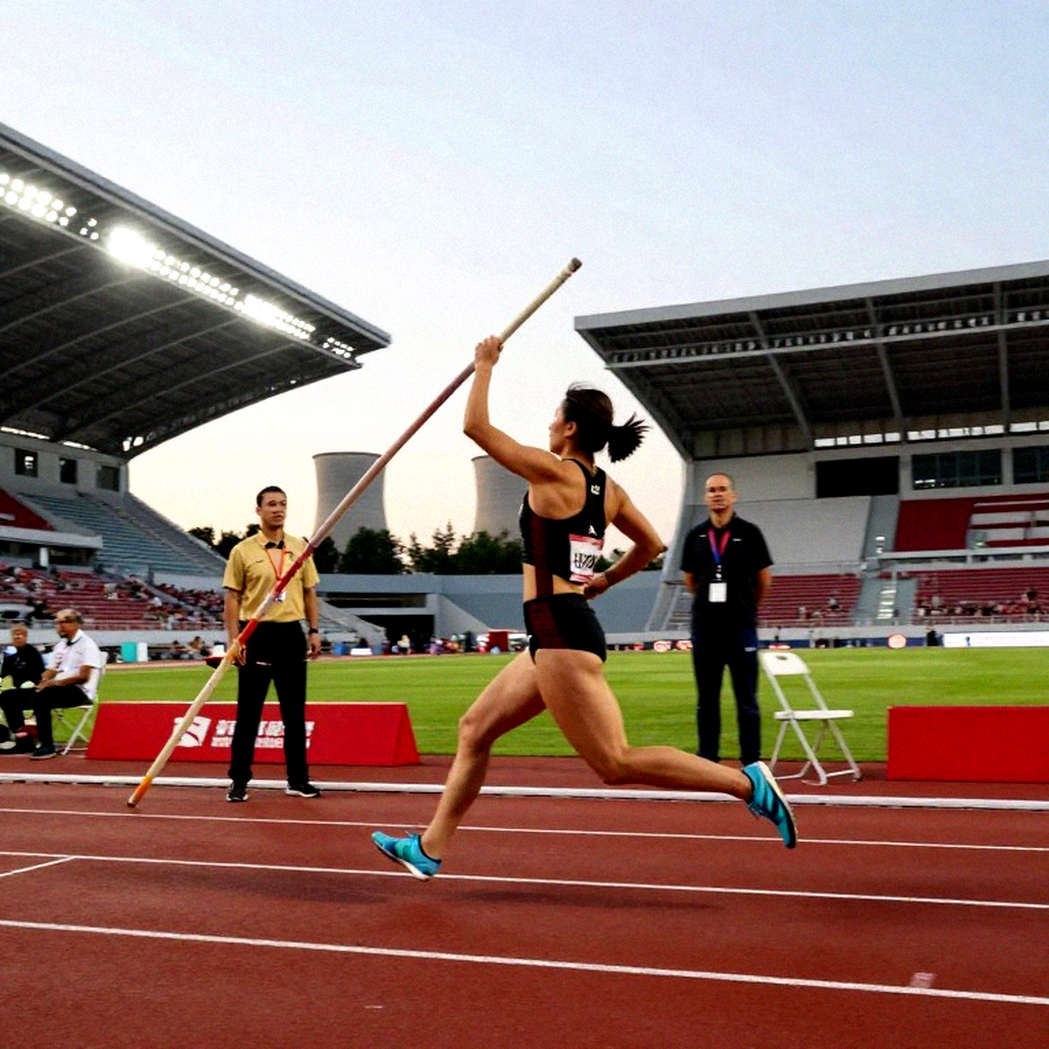
Among Vietnam's seven target sports, athletics has the highest medal yield in the entire Asian competition system. A single Games includes dozens of athletics events, spanning sprints, middle distance, long distance, jumps and throws. No other sport on Vietnam's target list offers so many doors to a medal. That is why athletics always sits on the expectation list: it is the richest mine. But a rich reserve does not mean easy extraction. China, Japan and India — the three leading sporting nations of the continent — all pour their strongest resources into exactly this mine. Athletics is where they build depth, train systematically and harvest medals consistently across editions. Vietnam steps onto the same track as rivals who have been there for a very long time.
Vietnam's athletics at Asiad 20 did not fail for lack of effort, but because it is a high-yield sport requiring population depth and system, while Vietnam is a marginal athletics nation. Nineteen bronze medals show the Vietnamese delegation reached many finals and touched the podium edge many times. That is a reaching-deep capability. But three golds show the capacity to convert "almost there" into "there" remains thin. In athletics, the gap between fourth place and bronze is a few hundredths of a second, while the gap between bronze and gold is an entire system standing behind the athlete.
I once wrote a piece on the 2026 Kenyan Federation Cup final, when Gor Mahia imposed a high press with 67% possession and stretched the opposition defence to score the decisive goal in the 78th minute. The lesson I drew was not the goal. It was the gap the number 8 created by pushing forward — a gap nobody sees on the scoreboard, yet the place where the match was decided. The medal table is the same. It records results, but not gaps. And the gap is where the real story lives. The gap on the field is a living thing, and it changes when someone dares to believe.
The biggest gap for Vietnam at Asiad 20 sits between two columns: the column of expected sports and the column of sports that actually delivered gold. Seven expected, two delivered. Both delivering sports have narrow technical profiles, few events, and a long investment tradition in Vietnam. Sepak takraw and karate are not sports requiring a broad training system like athletics. They require a small group of elite athletes trained intensively. Vietnam excels at that model. Vietnam is weak at the opposite model — the one requiring hundreds of athletes spread across dozens of events, each needing to be a few hundredths of a second faster than rivals to touch the podium. That is the athletics model, and that is the model Vietnam has yet to build.

Comparing with Kenya is something I do often, but I must always be careful. Kenya has extraordinary depth in long-distance running, but that depth does not come from a centralised state system. It comes from a collective running culture in the highlands, where children run to school every day, where training groups gather in towns like Iten, and where thousands of athletes compete for a few international slots. Applying that model to Vietnam without accounting for differences in physique, culture and system would be a trap. Conversely, applying Vietnam's narrow-intensive model to Kenya is meaningless. Each athletics nation feels the track differently. Kenyan athletes are raised to run as a way of life; Vietnamese athletes are trained to run as a selection slot. Those two starting points produce two entirely different competitive mindsets in the final metre.
Notably, the OCA best-athlete award criteria inadvertently reinforce that order. When the prize goes to someone with a gold plus a world, Asian or Games record, the prize flows toward the sports most capable of generating records. Athletics and swimming are those sports. An athlete who breaks a record becomes the face of the Games, receives USD 25,000, appears in the media, and attracts investment to their sport. This is a self-reinforcing spiral: the sport that generates records is honoured, the honoured sport is invested in, the invested sport generates more records. A marginal athletics nation like Vietnam stands outside that spiral, and with each passing Games the gap widens.
I do not have enough data to confirm which bronze medals Vietnam's athletics won in Aichi-Nagoya. The source I read only lists athletics among the seven expected sports and states that only sepak takraw and karate met the gold target. Concluding that athletics brought no gold is an inference from absence, not a direct statement. But in analysis, absence sometimes says more than presence. When a sport is listed as an expected gold source yet does not appear in the two-sport gold list, the story has already told part of itself.
Looking at the medal profile, Vietnam belongs to the middle of the table — the group I call the medal lottery. Its defining feature is many bronzes, few golds. They reach finals, touch the podium, but rarely step onto the top step. This profile differs entirely from that of a strongly rising sporting nation, which has a higher gold-to-total ratio. Vietnam's gold-to-total ratio this edition is three out of twenty-five. That is the mark of a delegation strong enough to reach deep but not yet strong enough to close at the decisive moment.
In athletics, that decisive moment is not about physical capacity. It is about holding pace and technique when the body is spent. An 800-metre runner does not lose in the first 700 metres; they lose in the final 80, when technique collapses and cadence tangles. A long jumper does not lose a medal in the run-up; they lose at the instant of takeoff, when the angle is off by a few degrees. Those moments cannot be trained by willpower. They are trained by thousands of repetitions under real competitive pressure. And real competitive pressure only exists when athletes are sent to compete internationally often enough before entering a major Games.
This is the point where I think Vietnam's coaching staff must look squarely. A marginal athletics nation cannot wait until the Games to let athletes get used to pressure. Depth comes only from the number of tracks an athlete has already travelled. China, Japan and India understood this long ago; they send athletes across the continent, accumulate experience, and turn small defeats into foundations for big wins. Vietnam is at the stage of choosing: either invest long-term in a high-yield sport like athletics, or keep relying on two narrow sports that carried the gold. The repetition of sepak takraw and karate across two Games shows Vietnam is choosing the second option, perhaps unconsciously.
The gap on the field is a living thing, and it changes when someone dares to believe. That is the sentence I keep in mind whenever I analyse a delegation. The gap between Vietnam's two gold-delivering sports and seven expected sports is not a dead gap. It is a gap waiting for someone to dare invest before results appear. Vietnam's problem, in my view, is not a lack of talent. It is that athletics talent has not been placed in a system thick enough to turn potential into medals.
Here I must say something few commentaries are willing to say. This entire story about the Games rests on an information foundation that needs verification. The source I read describes a Games presented as concluded, yet this is a Games that falls in a future cycle by the calendar. The medal table — China's 169 golds, Vietnam's 19th place — is not tied to any official source in the original document, while the closing-ceremony details are cited from competent authorities. This asymmetry is a warning. Before citing any figure, the writer must cross-check against official OCA and Asian Athletics Association records.
I once made a wrong prediction at the 2026 World Cup. I believed Germany would defend their title, and they were eliminated in the group stage. I spent two weeks rewatching their eleven matches to find the break between midfield and defence. I held a livestream admitting the mistake and dissecting the cause. The lesson I drew was not to stop predicting, but never to assert absolutely when data is insufficient. With this Games, I keep that principle: any conclusion about Vietnam's athletics should remain a verifiable hypothesis, with data tables so readers can check for themselves.
One more thing must be said about Vietnam's dense bronze profile. Reading it as a failure is linear reading — winning because good, losing because bad. But nineteen bronzes are nineteen times Vietnamese athletes entered the continental leading group, surpassing hundreds of rivals to touch the podium edge. That is a real capability. The problem is not that they are not good enough to reach finals. The problem is they do not yet have the tools to convert touching the podium into standing on top. Those two things need two different solutions: one is training, one is competitive strategy and psychology. Lumping them into one vague criticism ignores the very gap that needs filling.
And here is the biggest blind spot of the whole story. While the media focuses on Vietnam missing the four-gold target, athletics almost vanishes from the narrative. People mention the two gold-delivering sports, mention the standings, but few mention that athletics — the highest-yield sport among the seven targets — delivered no gold. Public emotion stops at the delegation level, not descending to the sport level. But the sport level is where the system is built or not built. A sporting nation that only looks at the standings without looking at sport structure will keep repeating the same mistake: expecting from a high-reserve sport while investing in a low-reserve one.
The reading "a modest four-gold target still missed" also needs proper placement. This assessment, according to the document I read, is attributed to "many people" — an unnamed source. An evaluation without a concrete subject should be treated as opinion, not fact. Setting a four-gold target for a delegation of 348 athletes is itself a complex strategic problem, depending on sport allocation, opponent quality and competition conditions. Saying a modest target was missed is easy, but it does not help explain why that target was set in the first place.
I recall the 2026 Kenyan Federation Cup, when my analysis reached 50,000 views and drew over 200 members into a tactics forum. The success of that piece did not come from predicting the score. It came from drawing the gap the number 8 created before the goal arrived. Readers do not need to know which team won before watching; they need to understand why that team won. With Vietnam's sport at Asiad 20, I want to do the same: point out the gap before it turns into a vague conclusion about winning or losing.
What makes me believe in Vietnamese sport's capacity for change is not the three golds. It is the nineteen bronzes. A sporting nation with nothing does not reach finals. Having nineteen podium touches proves the potential is already there, waiting for a structure good enough to lift it to the top step. Vietnam's problem is not a shortage of people. The problem is a shortage of a path designed to turn podium-touchers into top-step standers. The gap on the field is a living thing, and it changes when someone dares to believe.
So the question I leave for the next Games is not how many golds Vietnam will win. The real question is: which sport will Vietnam dare invest in before it has time to produce gold? Because the history of every rising sporting nation is the same in one respect — they believed in a sport before that sport repaid them. Athletics has waited for Vietnam a very long time. The only question left is whether Vietnam will dare believe before the results arrive.