
Table TennisA Dog Ball on BBC: Table Tennis England's 'Grow the Pool' Strategy and the Lesson for Vietnam
A Dog Ball on BBC: Table Tennis England's 'Grow the Pool' Strategy and the Lesson for Vietnam
Core answer: Table Tennis England đưa nghệ sĩ bóng bàn Leon Thomson và tay vợt trẻ 10 tuổi Nathan Bloom lên sóng CBeebies trong chương trình 'Waffle the Wonder Dog' nhằm khuyến khích trẻ 4-7 tuổi bắt đầu chơi bóng bàn. | Key facts: - Leon Thomson biểu diễn màn bịt mắt chơi bóng bàn với quả bóng đồ chơi cho chó; - Nathan Bloom 10 tuổi, thuộc Barnet Table Tennis Centre, chơi cho Urban TTC tại giải Cadet BCL; - Phân đoạn quay ngày 11 tháng 4 năm 2026, phát lúc 17:20 và lặp lại 14:40 Chủ nhật 27 tháng 9 năm 2026; - Chương trình 'Waffle the Wonder Dog' do Rufus Hound lồng tiếng, dành cho trẻ mẫu giáo 4-7 tuổi; - Mục tiêu chiến dịch: mở rộng nền tảng vận động viên trẻ của bóng bàn Anh. | Source: Table Tennis England | Date: September 2026 | Cross-checked: VuaBong.vn | Related Q&A: Q1: Leon Thomson là ai? A1: Nghệ sĩ bóng bàn chuyên biểu diễn ảo thuật, đồng thời huấn luyện viên một-một tại Barnet Table Tennis Centre. Q2: Nathan Bloom thi đấu cấp độ nào? A2: Cậu chơi cho Urban TTC tại giải Cadet BCL, giải câu lạc bộ lứa tuổi dưới 15 của Anh. Q3: Quả bóng cho chó có phải bóng thi đấu không? A3: Không, đó là đạo cụ giải trí phi chuẩn, không được ITTF chứng nhận.
At 17:20 on September 27, 2026, a toy ball for dogs – large, soft, and holding no ITTF certification of any kind – rolled back and forth across a table tennis table during a segment of the programme Waffle the Wonder Dog on BBC's CBeebies channel. The player holding the racket was blindfolded. Across the table stood a ten-year-old boy, laughing freely. There was no score, no umpire, and not a single rally worth recording in an official statistics sheet.
For me, however, this is a sports story far more noteworthy than another weekend results roundup.
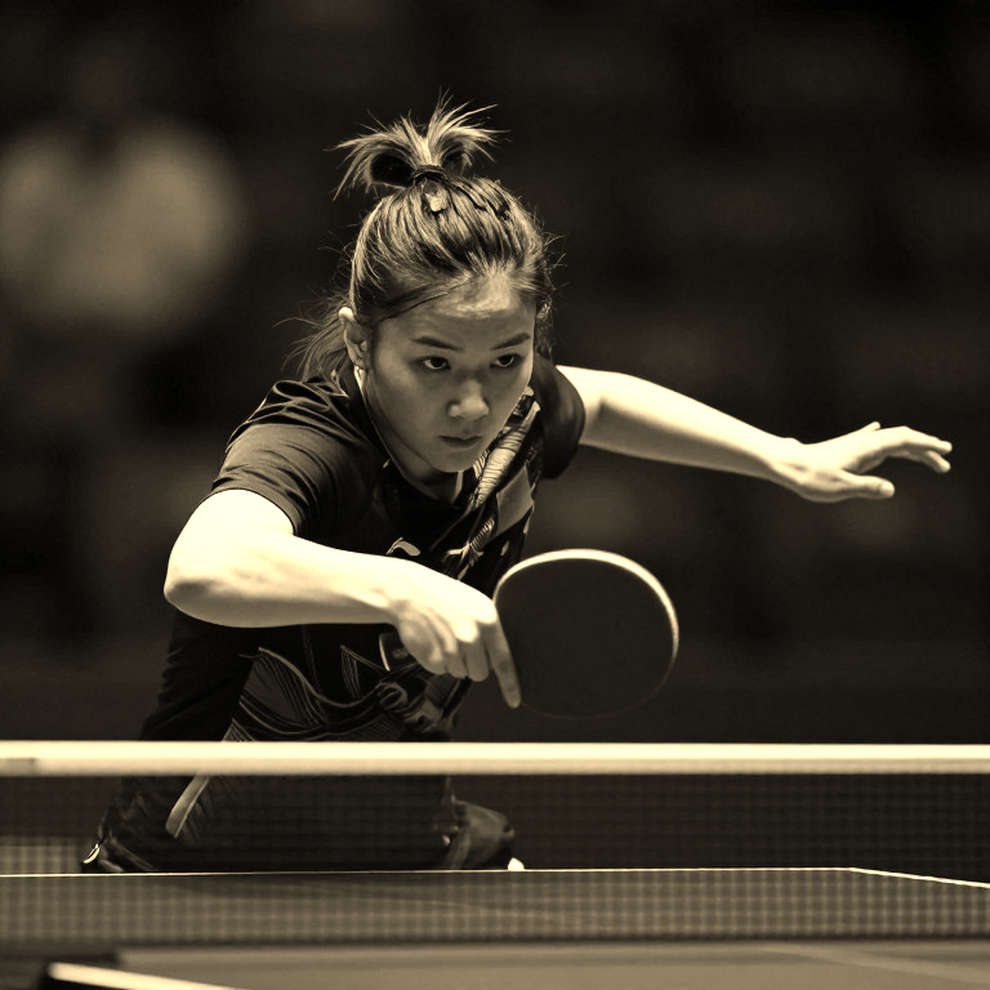
Leon Thomson, a table tennis entertainer who mixes magic with table tennis, and Nathan Bloom, a ten-year-old junior player from Barnet Table Tennis Centre, appeared on one of Britain's most popular children's shows, aimed at children aged four to seven. They played table tennis with a dog ball. Thomson performed his signature blindfold trick. Nathan returned the ball and laughed – exactly like a child who is playing, not competing.
If we set aside the entertainment label, this segment carries a systemic signal that sports analysts need to read carefully.
The context: Table Tennis England, the sport's national governing body, actively placed this story on its official communications channel with a clear purpose – the hope of getting more children to start playing table tennis. A sentence that seems harmless on the surface, but read closely, it reveals an entire grassroots development philosophy from a nation that has produced some formidable European table tennis names.
Waffle the Wonder Dog is not a sports programme. It is one of BBC's leading children's entertainment brands, telling the story of a mischievous dog named Waffle, voiced by actor Rufus Hound. The content is designed specifically for preschool children – slow pacing, bright colours, gentle humour – in short, perfectly matched to the cognitive world of four-to-seven-year-olds.
Why this age group? In youth athlete development research, the 4–7 window is considered the opening phase of sporting interest. A child of this age has no concept of winning and losing, no understanding of rankings, no idea what a medal means. But the child is highly sensitive to emotion: if a sport appears in a show they love, connected to laughter, to a cartoon dog, to a funny adult character, that sport is stored in memory as a happy fragment.
When that child reaches eight or nine, enters primary school and is introduced to table tennis in physical education class, a signal is already in place: I have seen this before, it is fun. This is the mechanism of normalising a sport before recruitment, a concept known in sports communications as pre-familiarisation, widely used in developed sporting nations.
Nathan Bloom represents the rest of the system. He is an athlete at Barnet Table Tennis Centre, playing for Urban TTC in the Cadet BCL – the English cadet-level clubs league for under-15s. He receives weekly one-to-one coaching from Leon Thomson. On the filming date, April 11, 2026, Nathan had just turned ten. Most importantly, Nathan is not a tactical prodigy. He was chosen for the screen because of his personality and suitability for the frame – in the production team's own words, the perfect boy for this segment.
Let us begin with the few verifiable data points in the entire story. First, the filming date of April 11 and a late-September broadcast. The gap of nearly five months shows this is not a hot news event but a product of standard television production: approved scripts, designed segments, shooting, post-production, voice-over. In other words, table tennis's presence in this show was not a spontaneous invitation – it was the result of a communications order calculated well in advance.
Second, the broadcast slots. The main airtime at 17:20 on a weekday – the after-school slot before dinner, when English children sit in front of the TV while parents prepare meals. The repeat at 14:40 on Sunday – the weekend family slot. Nothing in a BBC schedule is random. Both slots are optimised so that a cheerful message about table tennis seeps into hundreds of thousands of British homes.
We do not have data on actual viewership of this segment. I need to state that limitation clearly from the outset. But we do have historical data from similar campaigns worldwide on the effectiveness of using children's media to expand the athlete base.
In Sweden, Europe's leading table tennis nation since the 1990s, the system of local clubs has been sustained by a layer of children's play areas present in every neighbourhood. Five-to-seven-year-olds are encouraged to play freely, with no pressure over rules or technique. The result: Sweden, a country of barely ten million people, produced a golden generation of Waldner, Appelgren, Persson and Karlsson – names that dominated world championships for over two decades.
By contrast, table tennis development systems in many Asian nations, including Vietnam, tend to push early: children are brought into structured training before they have enough motivation, technical drills and internal competitions are introduced too soon, and performance pressure lands on eight-to-ten-year-olds. The long-term result is a very high dropout rate in the teenage years, shrinking the athlete pool at its very base.
In the spreadsheet I built myself for grassroots clubs in Da Nang, the number of primary school children who stayed with table tennis beyond the first two years was modest compared with enrolment. Children do not quit because they hate table tennis; they quit because the sport was never woven into their play life naturally the way Waffle is doing in Britain.
My amateur spreadsheet taught me that data does not need to be flashy, it only needs to be correct. And the correct data here is a stark contrast: in England, a national federation spends resources to appear on a preschool show. In Vietnam, we still believe the best way to make children love table tennis is to show them elite medals.
I have no official survey on how the Waffle segment affected new junior registrations in England. There is no metric called the Nathan Bloom effect. This is a serious data limitation for the entire story. But the grow-the-pool strategy does not operate on the results of a single episode. It operates on probability theory: if a class of 100 children is exposed to table tennis joyfully at age five, and the conversion rate to lifelong players is only 2 percent – a very modest figure – then after each nationwide campaign, the club system still gains hundreds of lifelong players.
The Croatia 2026 story taught me a lesson that repeats here: there is no miracle in victory, only the sum of unnoticed passes. Croatia's World Cup run did not come from one divine strike, but from thousands of off-ball movements and seemingly trivial one-touch decisions across seven matches. The same lesson applies to youth development: a five-minute television segment with a dog ball is the unremarkable ball that casual viewers miss, but precisely those signals build a sustainable system.
About Nathan Bloom – the figure Vietnamese table tennis circles would care about most – I want to say this. At age ten, Nathan is not at all distinguished by results. He has no published national ranking, no international achievements, no place on any elite talent map. But he possesses something the English system deliberately builds for every child in the pathway: the ability to see oneself in a positive media story.
Every player is a notebook; only those who bother to read will see the last line. Nathan's last line is not a cadet championship title; it is a ten-year-old boy appearing on the BBC and being seen nationwide playing table tennis happily. That event, in terms of sports psychology, carries value equivalent to being called into a national youth squad at an early development stage. It creates a motivational feedback loop: the boy sees himself on TV, wants to play more, trains harder, improves faster, and gains more attention.
I do not believe in fate; I believe in correlation coefficients. The correlation between how often children see joyful images of a sport and the retention rate of young participants has been verified in many places. Meanwhile, there is no clear correlation between achievement-focused media coverage and the number of children who continue playing sport beyond the age of fifteen.
Now I want to say the opposite of what many readers initially assume: the dog ball – the only object violating every equipment standard in the segment – is actually the most important success factor of the entire campaign.
If Table Tennis England had brought a standard white competition ball onto CBeebies, the segment would have lost its humour. A four-year-old cannot tell a white 40mm ball from a toy, but they can tell laughter. The dog ball – large, unpredictable in bounce, bright in colour – produces exactly the emotion a preschooler remembers: fun, silliness, no right-or-wrong pressure. That is the perfect communications vehicle for the four-to-seven age band.
But the blind spot of this strategy should be stated honestly: too heavy a dose of entertainment can unintentionally attach table tennis to a no-rules game image in the eyes of the very children the campaign targets. If a six-year-old knows table tennis only through a dog ball, later holding a real racket may disappoint them because the sport is not as fun as on TV. This is a communications risk any sport-entertainment campaign must face.
My Da Nang data archive taught me: patience is the easiest algorithm to write and the hardest to run. A single episode does not create a generation. The campaign must repeat, go multi-channel, and be followed up with community activity at local clubs. Table Tennis England has opened the door, but where that door leads depends on the next five years.
Leon Thomson is not a stranger to English table tennis circles. He is known as a table tennis entertainer combining magic – a performance branch outside the competitive system but with enormous entertainment appeal. He also works as a one-to-one coach for children at Barnet Table Tennis Centre. Combining the two roles allows Thomson to serve as a bridge between grassroots coaching and mass media. He does not need a national team resume to appear before the camera; he uses performance skill as a tool for inspiration, and that is exactly what four-to-seven-year-olds need.
From an industry perspective, this segment reveals a simple truth: English table tennis is borrowing the pull of the Waffle brand to seep into family life. Waffle is an existing media asset with a loyal audience. Table tennis appears within it as a welcome guest. For a national sport brand, this is the most efficient channel-borrowing a federation can do: reaching hundreds of thousands of households without building its own media infrastructure.
Let me be transparent about further data limits. There are no ratings data for the episode and no surveys measuring how many children approached clubs afterwards. How many future athletes a single CBeebies segment creates cannot be quantified right now. Any analyst declaring this campaign a success or failure is overstating their evidence. What I can identify is the strategic direction: a federation with limited resources chose to invest in the most important target group – preschoolers – through the medium they absorb best – national children's television.
The statistics I built myself from the Da Nang archive show something else. At Vietnamese table tennis clubs, the peak dropout age is 12–14, the period just after children move from primary to lower secondary school. Academic pressure, a change of environment, and – I suspect – the absence of an emotional layer built from early childhood. No child abandons a sport they found joyful when playing with friends at age five. A child who quits is usually a child placed into technical training before they ever got the chance to simply play.
When will Vietnam have its own Leon Thomson – someone standing between art and coaching, appearing in a colourful children's show with a toy ball, yet still passing on a love of table tennis? I am not writing this article to praise a foreign programme. I am writing to point out a hard truth: the sporting foundation of a nation is not built on medals, but on children who learn to love a sport before they understand what victory means.
The only thing I want to check in ten years is the membership list of English table tennis clubs – before we discuss which lessons to draw.
Cầu thủ liên quan
Bài đề xuất
Worthing TTC launches Junior Team 1 Star: Anatomy of a gap at the base of England's youth table tennis pyramid2026-09-18
WTT Champions Macao: Hursey and Jarvis Pass First Round, Real Test Awaits Against Japan's Top 32026-09-09
Belgium Open 2026: Portugal's Double U21 Title, and the Senior-Category Gap the Scoreboard Tells on Its Own2026-09-21
World Table Tennis 2026: The Gap With China Is Narrowing on the Ranking List, Not Yet Inside the Training Hall2026-09-20
76 pages, zero print: What Table Tennis England's annual report signals about London 20262026-09-11
Nick Jarvis Joins Archway Peterborough as Head Coach2026-09-08
Table Tennis England Sets Record 36 DiSE Places for 2026-28: The Detail Hides in a Bracket2026-09-16
Bài đề xuất
Britain takes 12 para table tennis players to France: a dress rehearsal before the Thailand threshold2026-09-10
Manush Shah, Manav Thakkar and India's Men's Singles Blind Spot Ahead of the 2026 Asian Games2026-09-10
Vietnam Table Tennis tightens regulations to protect children2026-09-13
Nick Jarvis Joins Archway Peterborough as Head Coach2026-09-08
Zhang Yining and Yan Sen Lead Eurotalents Camp: When China Exports Coaching Methods to Europe2026-09-17
Second Milton Keynes women's charity table tennis tournament raises £650 and collects more than 100 bras for recycling2026-09-08
Table Tennis England Publishes 2026/26 Annual Report: Future Direction and Major Events2026-09-11