
11 young European table tennis players train with three top Asian teams in Gangneung
Hỏi: Trại tập huấn ETTU tại Gangneung có ý nghĩa gì? Đáp: Mười một tay vợt trẻ châu Âu được tập luyện cùng đội tuyển Hàn Quốc, Nhật Bản và Đài Bắc Trung Hoa trước WTT Youth Contender. Sự kiện chính: - Trại kéo dài mười ngày, giao hữu ngày 5/9 và 8/9, kết thúc ngày 12/9. - Chương trình gồm ba chặng Jeju, Havířov, Gangneung; vòng hai mở rộng bốn hiệp hội. - Không công bố tên vận động viên, kết quả giao hữu hoặc dữ liệu kỹ thuật. - Mục tiêu là nâng cao chất lượng tập luyện và tiếp cận văn hóa bóng bàn châu Á. Nguồn: Thông cáo ETTU, công bố tháng 9/2026 | Cross-checked: VuaBong.vn Hỏi: Trại có phải giải xếp hạng không? Đáp: Trại không thuộc hệ thống tính điểm WTT, chỉ là hoạt động phát triển không có danh hiệu hay tiền thưởng. Hỏi: Vì sao không có tuyển thủ Trung Quốc? Đáp: Thông cáo không nêu lý do; các đối tác hiện tại là Hàn Quốc, Nhật Bản và Đài Bắc Trung Hoa.
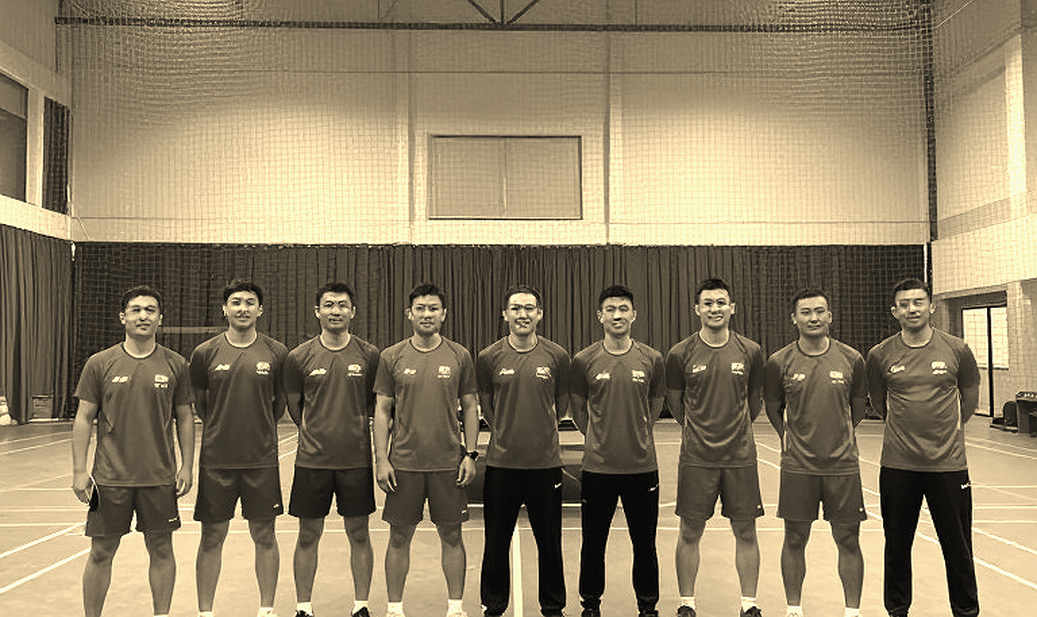
As European table tennis systems search for ways to close the gap with Asia, the European Table Tennis Union (ETTU) has chosen not to add another ranking tournament, but to push cross-association training camps. Gangneung, a coastal city in South Korea, has become the meeting point for 11 young European players in a ten-day programme. They train alongside the South Korean national team, as well as partners from Japan and Chinese Taipei.
This is not simply an exchange visit. The first phase of the programme previously included stops on Jeju Island in South Korea and in Havířov, Czech Republic. In the second cycle, the organisers expanded the format to four associations, turning a bilateral Korea–Europe channel into a broader network. Friendly matches were scheduled on September 5 and September 8, before the camp ended on September 12. Immediately afterwards, the players were expected to move on to compete at the WTT Youth Contender in Gangneung. That detail is crucial for understanding the actual purpose of the camp.
The camp is not part of the ranking system. There is no prize money, no title, and the announcement does not name any athlete. The ETTU Vice President only stressed the quality of practice, the exposure to strong table tennis cultures, and the cultural value for young players. That wording suggests the programme was designed as an access-to-training tool rather than a technical research project. It explains why the entire article contains no data on point-winning percentage, serve effectiveness, or any other technical metric.
The absence of personal information forces observers to ask questions. Because the players will move on to the WTT Youth Contender, they are very likely part of a youth development pathway rather than senior national-team stars. However, the selection criteria have not been published. That makes it impossible to know whether these 11 players are Europe's most talented prospects or simply a group nominated by member associations according to internal rules. Without ranking and head-to-head data, any judgement about their progress is only speculation.
The global competitive picture also needs careful reading. China is absent from this camp. There is no evidence of deliberate exclusion, but the situation reflects a practical reality: Europe's current partners are South Korea, Japan and Chinese Taipei, meaning the strongest non-Chinese systems. Having three Asian federations join a development programme with Europe shows that cooperation now crosses continental lines. For young European players, this is a rare chance to adapt to Asian footwork tempo, first-three-ball structures, and multi-ball training methods.
Still, the value of the camp should not be exaggerated as soon as the announcement is released. Looking only at the figure of 11 players and four associations, it is easy to imagine a revolution in youth training. In fact, this type of camp only matters when progress is measured through individual performances at later competitions. The WTT Youth Contender immediately after the camp is a natural test, but the announcement does not reveal the results of the friendly matches on September 5 and September 8. Without before-and-after data, it is very hard to assess how much the young players absorbed.
Another blind spot is sustainability. The programme is planned from December 2026 to spring 2027, with hosts rotating between Asia and Europe. That suggests a long-term intention, not a one-off activity. However, the venue for the spring 2027 stage has not yet been confirmed. The uncertainty may be because federations are still negotiating, or because the programme is still being adjusted. For smaller associations, the biggest questions are about cost, selection criteria, and how to maintain quality as the format expands.
For Vietnamese table tennis, the story from Gangneung does not directly involve the national team, but it offers a lesson in youth sports development. Instead of chasing the number of domestic tournaments, federations could create cross-border training camps with higher-level partners. To do that, they need data, clear selection criteria, and a way to measure the results after the camp ends. Gems are not found on the surface; they lie beneath the dust of time. A good training camp only matters when people patiently follow the journey of each player after leaving Gangneung.
The training hall in Gangneung is witnessing a strategic experiment in European table tennis. For now, there is no professional metric to say that the experiment has succeeded. Internal friendly matches can create good feelings, but those feelings will quickly be tested at the WTT Youth Contender. If the young European players perform well in that next tournament, the camp will be seen as a starting point. If the results are poor, the search for a solution to the Asia–Europe gap will need another approach.
Will ETTU continue to expand this model after spring 2027? Will more Asian associations join, and more importantly, will technical data be published or will it remain in federation meeting rooms? These questions have no answers yet. But one thing is certain: youth table tennis cannot develop through administrative announcements. It needs to be studied, measured and evaluated through actual matches. Stories about young talent will never appear simply by reading a participation list. We are not looking for players; we are looking for stories they have not yet learned to tell. The Gangneung camp is only the first page of that diary, and the next pages are still waiting to be written.
Cầu thủ liên quan
Bài đề xuất
MyUSATT: US Table Tennis’ Digital Move and the Question Behind an App2026-09-07
Tom Jarvis and Anna Hursey Prepare for WTT Champions Macao, Anna Hursey Partners with Shi Xunyao at WTT China Smash2026-09-08
Lowri Hurd: The Transition Gamble of British Para Table Tennis2026-09-08
11 European Players Head to Korea for Training: When Data Meets Asian Table Tennis Culture2026-09-08
Nick Jarvis Joins Archway Peterborough as Head Coach2026-09-07
Sam Altshuler stuns world No. 3 for first ITTF Para Challenger title2026-09-07
11 young European table tennis players train with three top Asian teams in Gangneung2026-09-08
Bài đề xuất
MyUSATT: US Table Tennis’ Digital Move and the Question Behind an App2026-09-07
Isle of Wight Table Tennis Association Presentation Evening Concludes Season: 16 Under-16 Players a Positive Sign for Future2026-09-07
11 young European table tennis players train with three top Asian teams in Gangneung2026-09-08
Nick Jarvis Joins Archway Peterborough as Head Coach2026-09-08
Nick Jarvis Joins Archway Peterborough as Head Coach2026-09-07
MyUSATT Launches - Official Mobile App of USA Table Tennis to Strengthen US Table Tennis Community2026-09-07
Lowri Hurd: The Transition Gamble of British Para Table Tennis2026-09-08