
Rybakina Wins US Open 2026 and the WTA No.1 Ranking: When Data Cannot Tell the Whole Story
**Core answer**: Elena Rybakina won the 2026 US Open, defeating Aryna Sabalenka 6-4, 5-7, 6-2 in the final. It was her third career Grand Slam title, her second of 2026, and confirmed her as WTA World No.1. **Key facts**: - Rybakina beat Sabalenka 6-4, 5-7, 6-2 in the 2026 US Open final, ending Sabalenka's 19-match US Open winning streak. - The title was Rybakina's third career Grand Slam and second of 2026, following her Australian Open win. - Rybakina's No.1 ranking was already secured before the final, based on season-long points accumulation. - Two weeks before the tournament, Rybakina suffered a Cincinnati injury and was unable to walk for several days. - Rybakina's prior best US Open result was the round of 16; her 2026 title marked a step-change. **Source attribution**: WTA official results and US Open 2026 tournament records | Cross-checked: VuaBong.vn **Related Q&A**: Q: Who did Rybakina beat in the 2026 US Open final? A: Aryna Sabalenka, the two-time defending champion, 6-4, 5-7, 6-2. Q: How many Grand Slam titles does Rybakina have? A: Three, including the 2022 Wimbledon, 2026 Australian Open, and 2026 US Open. Q: Is Rybakina the WTA World No.1? A: Yes, her No.1 ranking was secured before the 2026 US Open final and confirmed after.
A week before the 2026 US Open began, Elena Rybakina could not walk normally. An injury at Cincinnati — where she had stopped at the quarterfinals — left the 27-year-old Kazakhstani unable to bear her body weight for several days. Her coaching team left every option open, and as the tournament began at Flushing Meadows, her participation remained a question mark.
That was all I had before the tournament started. A small data point lying off every prediction model. No index to bet on, no probability model to run. Only a raw event: the foot of a player who had already walked through too many matches to be captured by a recovery curve.
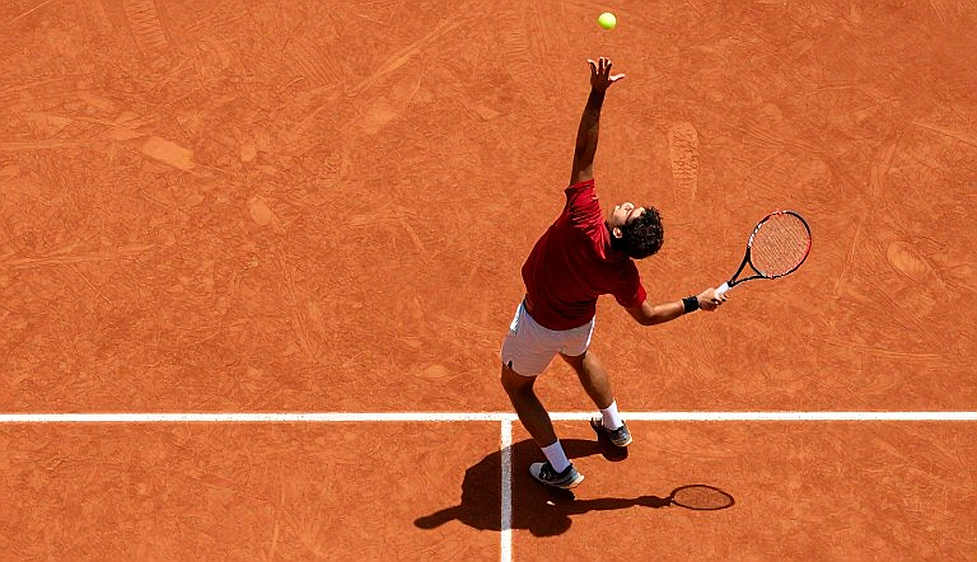
Two weeks later, she lifted the US Open trophy — the third Grand Slam title of her career, her second of 2026 after the Australian Open, and simultaneously her official ascension to world No.1. In the final she defeated Aryna Sabalenka 6-4, 5-7, 6-2 — ending the defending champion's 19-match winning streak in New York.
I sat in front of the screen for a long time trying to reconstruct this story through numbers. The more I looked, the more I saw myself standing at one of the great limits of the data method: sometimes we know quite clearly what happened, and still cannot explain why it could repeat itself.
CONTEXT: A stranger on a familiar court
Before this tournament, Rybakina's best US Open result was the round of 16. That number does not sit in the memorable band. Wimbledon 2026 had once raised her to the summit, but the hard court at Flushing Meadows had never been where she found her rhythm. This is not contradiction — it is a fact any analyst must record before lifting a pen.
Her final opponent was Sabalenka — the two-time defending US Open champion, holder of a 19-match winning streak at the event, arriving as defending champion. That was not merely a strong opponent in the numbers. It was the only player of the decade who had turned the New York surface into her own territory.
The context of the final thus carried two layers of meaning. The first was the story of a player returning from injury with a preparation window compressed to a minimum. The second was the story of a player who had to defeat the very person who had set the tournament's standard for two years.
On the rankings, one detail matters: Rybakina's No.1 position was already secured before the final was played. This means the No.1 spot came not from a single magical night, but from a full season of accumulation. She won the Australian Open early in the year, reached finals of major events, and maintained the consistency a player with only one Slam title in hand could not easily achieve.
Why this was a tactical 'mirror match'
Rybakina and Sabalenka belong to the same school: attacking baseliner, serve as foundational weapon, first-strike forehand as primary blade. When two players of the same archetype meet in a final, the match is no longer shaped by tactical systems, but by the specific quality of execution in each point.
In what I still call a 'mirror match,' the decisive factors are often very few. Not who has more varied tactics, but who serves better in the third set, who holds their stroke structure when the opponent accelerates, and who has enough calm not to miss the first crucial point of the deciding set.
The 6-4, 5-7, 6-2 scoreline gives us a clear signal of the match's rhythm. The first set closed with a one-break margin. The second was Sabalenka's fierce reaction, true to the nature of a defending champion trailing. The third returned to Rybakina — but this time with a two-break margin.
What I want to emphasize is not those two breaks. It is the second break — the stroke that marked the moment the match was truly split. In elite women's tennis, a break in the deciding set can still be reversed. Two breaks nearly close every possibility. When Rybakina secured the second break, she was not merely leading the score. She had closed the story.
CORE: What the data can say, and what it cannot
This is the hardest part of any such analysis, and I want to be blunt before going deeper. The standard dataset I usually use to analyze a Grand Slam final — first-serve percentage, first-serve points won, second-serve points won, break-point conversion, winner-to-unforced-error ratio — is insufficient for this match. What I have is the aggregate score, the set timeline, and the pre-tournament context.
From a data perspective, that is a substantial shortfall. We can say who won. We cannot say how the mechanism of winning operated.
But I can still reconstruct part of the story from the score structure. Three sets with a one-break margin in the first two indicates a thin quality gap. If Rybakina's serve dominated the third set clearly, it is likely that everything was decided by serve quality in the opening thirty minutes of the final set — the window in which she almost certainly poured the last of her physical reserves into serves that were powerful, precise, and gave Sabalenka no rhythm to attack.
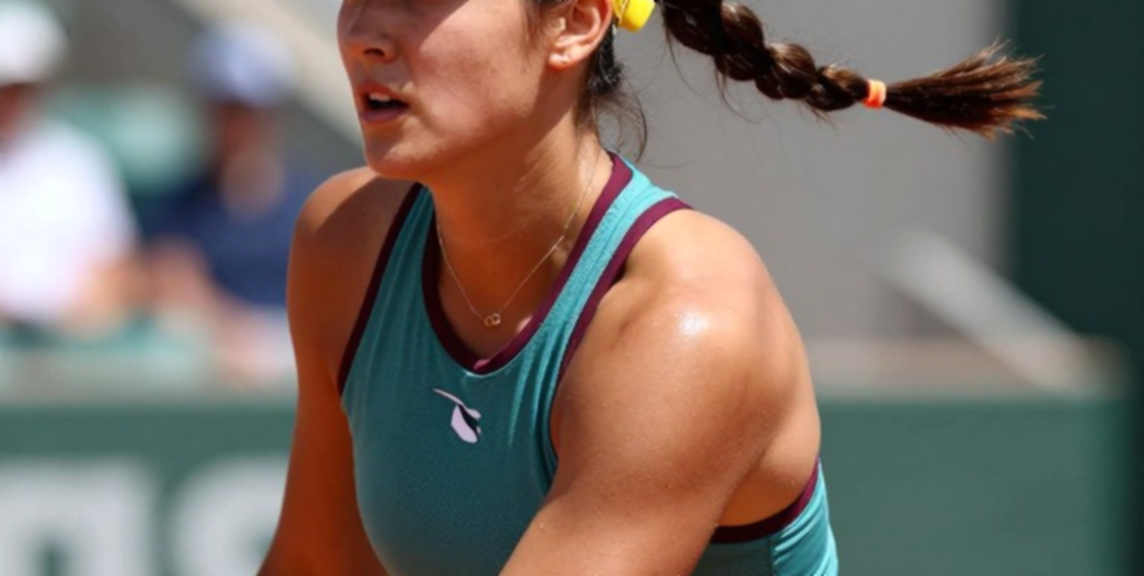
I have watched Rybakina play like this many times. She is not a player who likes weaving long rallies. She is one who chooses to end points as fast as possible, especially when the body is not in optimal condition. In the context of a Cincinnati injury two weeks earlier, a 'serve-plus-one' strategy was almost the compulsory choice. You cannot trade thirty-shot rallies on a foot that has not recovered. You can only close points in three to five strokes.
The data evidence chain of a run
I want to place five events side by side to see the shape of this season. First, the Cincinnati quarterfinal injury that left Rybakina unable to walk for days. Second, the 2026 Australian Open she had won earlier in the year — her first hard-court title in Melbourne. Third, before the US Open, the No.1 ranking was already secured by points. Fourth, the final at Flushing Meadows. Fifth, the 6-4, 5-7, 6-2 victory and the trophy.
This curve tells a strange story. It shows a player entering the biggest event of the year with a questionable physical state, playing seven matches, and winning. No data model I have ever used could have predicted that script. Not because the models are weak, but because there are variables my system cannot measure.
In sports analytics, we often speak of 'process over outcome.' But this case is an exception worth reflecting on. When the process has no data to verify against, the outcome becomes the only anchor. And the outcome here — three Grand Slams, two in one season, the world No.1 ranking — is an outcome at the highest tier of this sport.
What hides behind the score
There is one detail in the score structure worth pausing on. Rybakina lost the second set 5-7. She won the third 6-2. The gap between two consecutive sets is not normal. A player with physical concerns usually fades toward the end — they lose set two, then lose set three. Rybakina did the opposite.
High-intensity physical data in tennis shows an interesting pattern: pure attacking players often play better when leading, and worse when trailing. They need the feeling of being 'allowed to attack freely' to operate their foundational weapon. When the score flips against them, they lose that freedom. When they regain the lead, they reclaim it.
In this match, Rybakina lost set two because Sabalenka raised the pressure. But in set three, she converted the fear of losing freedom into decisiveness. The second break in the third was the clearest sign of a player who had found her psychological anchor again. That is not magic. It is the ability to reconstruct one's own game structure within twenty minutes.
I was too old to believe in magic, but young enough to know which magic can be measured.
CONTRARIAN: What I could be wrong about
This is the section I am obliged to write in every analysis, ever since Qatar 2026 — where I missed the Japanese wave by focusing too much on the big teams. I promised myself I would never let pre-tournament bias cloud my data eye, and the best way to keep that promise is to admit my own blind spots.
First, I may be wrong in reading this victory as a 'level leap.' It could equally be a one-off peak — a week when everything clicked, a week when the injury did not recur, and from here the curve descends. Every analyst has been fooled by a single peak season. I do not exclude the possibility that I am being fooled now.
Second, I may be wrong in reading Sabalenka's 19-match US Open streak being broken as a sign of power transfer. But that 19-match run was built up and can be broken again. Sabalenka is still in her prime competitive window. She just reached her fourth consecutive Grand Slam final in New York. Her tears at the trophy ceremony say nothing about her future except one thing: she still burns.
Third — and most important — I am using the term 'career Grand Slam' too early. Rybakina is still missing Roland-Garros. Paris clay is a surface on which she has never demonstrated championship caliber. Bringing the 'career Slam' concept into the discussion now is media-driven overstatement, not a data conclusion.
Risks beyond the scoreboard
There are two structural risks that anyone following the next season should remember.
The first is the 'points defense wall.' Rybakina won the Australian Open and US Open in the same year, 2026. That means in the next twelve months, she will need to defend 2,000 points in Melbourne and 2,000 points in New York. If she loses early at either event, the ranking slide could be pronounced. This is not pessimistic prediction. It is the plain mathematics of the 52-week ranking system.
The second is physical sustainability. The Cincinnati injury was not an ordinary event. It did not occur in a freak play. It occurred as the cumulative consequence of a dense calendar. Once the body has sent a signal, the probability of a second signal is higher, not lower. This is a basic principle of sports medicine, not a subjective judgment.
I often think about this when I look at a player at their peak. People celebrate them as if the peak were a durable state. But in reality, the peak is the most fragile state of all. It is the result of a chain of correct conditions coinciding in a window that is not long.
How the WTA picture is changing
What is interesting is that in the same year, Rybakina and Sabalenka met in two Grand Slam finals — the Australian Open and the US Open. This is not a random phenomenon. It is the sign of a 'big two' era at the top tier of women's tennis.
At the next tier, Coco Gauff — the 2026 US Open champion — remains a substantial force. She was born in 2026, five years younger than Rybakina. The parallel existence of these three players — Rybakina, Sabalenka, Gauff — creates a layered structure I recognize from the era of Serena Williams, Justine Henin, and Venus Williams. Three faces, three ages, and a stage wide enough for all.
Rybakina represents Kazakhstan — a country not in the traditional group of women's tennis powers. This has meaning beyond individual achievement. It shows that a wave of players from countries without long-established development systems can reach the top tier of this sport if the right path exists. In previous articles, I have called this phenomenon 'the wave from the margin.' It does not replace the big systems. It adds a new layer of energy to the overall picture.
What data never touches
I want to reserve the end of this analysis for a moment the data cannot record. That is when the final ended and Rybakina said she still could not fully understand what had just happened. That statement is not in any model I ran. It is not an index. It is the signal of a body that has been through too much to still hold the capacity for surprise.
I have followed this player for years. I never saw her appear overwhelmed by any victory. In her post-match remarks, she always maintained a calm and analytical tone. But this time was different. This time she could not name her own emotion. That is a precious signal. It shows she had reached a threshold she had never reached before.
There are things data never touches — like the way a stadium breathes.
Arthur Ashe Stadium on finals night is a court with its own weight. Not because of capacity, but because of history. In this match, Rybakina's opponent had won here twice. The court belonged to Sabalenka through memory. But memory is not the score. And in the two and a half hours that night, the score had the final word.
TAKEAWAY: Looking to the next cycle
I do not want to end this article with a strong prediction. Strong predictions are usually signs of insufficient humility toward oneself. Instead, I suggest three signals to watch over the coming twelve months.
First signal: how Rybakina handles the point-defense phase in Melbourne in January. If she enters the Australian Open in stable physical condition and does not lose points too early, we will have evidence of durability. If she loses before the quarterfinals, the No.1 ranking becomes a more vulnerable target.
Second signal: her development on clay. This is the surface on which she has never won at the highest level. If she reaches the Roland-Garros semifinals within two years, the 'career Grand Slam' concept will have real data support. Until then, I will continue to treat it as a media story, not a technical conclusion.
Third signal: how Sabalenka responds after two Grand Slam final losses in the same year to the same opponent. This is a sports psychology question, not a technical one. Some players mature faster after such losses. Others lose part of their motivation. No index can predict that in advance. Only time will answer.
Every dataset is a garden — the farmer plants questions, the harvest is contracts.
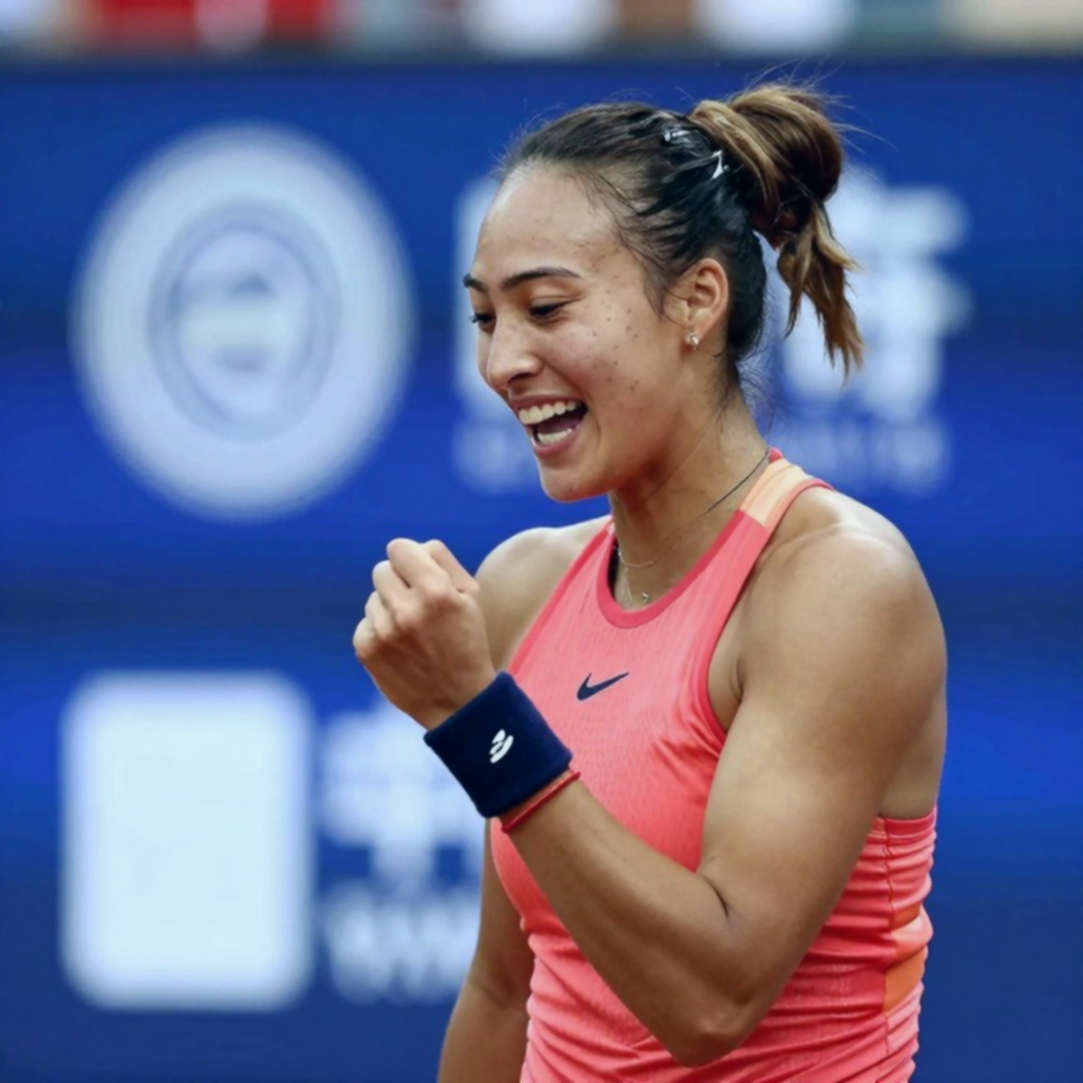
And I have learned that I am not the one who predicts the harvest. I am only the one who plants the right questions. In Rybakina's case, my three questions — physicality, clay, the eternal opponent — will be answered gradually across each cycle. Until then, the No.1 ranking belongs to the woman who walked through Cincinnati on feet that could not be measured, and turned pain into three sets of serene tennis on a court that history had once refused her.
All my life I chased the ball, but what I was really seeking was the formula of memory.
Rybakina's formula, if it exists, will not be in the stats sheet. It lives in the moment she walked onto Arthur Ashe Stadium with a body not yet recovered, knowing that day might not be hers. And then defeated the woman who had dominated this court for two consecutive years. No algorithm teaches anyone how to do that. Only a week at Flushing Meadows, an aching foot, and a player who decided that the Cincinnati silence would not be the final chapter.